Bridges between habitat and species conservation in the Great Plains

Katharine Hogan, PhD, Director of Conservation

Lauritzen Gardens, Nebraska

In 2016 I came to Nebraska for what I thought was going to be a one year sojourn in TNC Nebraska’s Hubbard Fellowship program. Now it’s 2025, and I’m still here, likely to stay! I got so hooked on prairies that I started leading the conservation department at Lauritzen Gardens in late 2024, with a focus on imperiled plants of the Great Plains and Midwest.
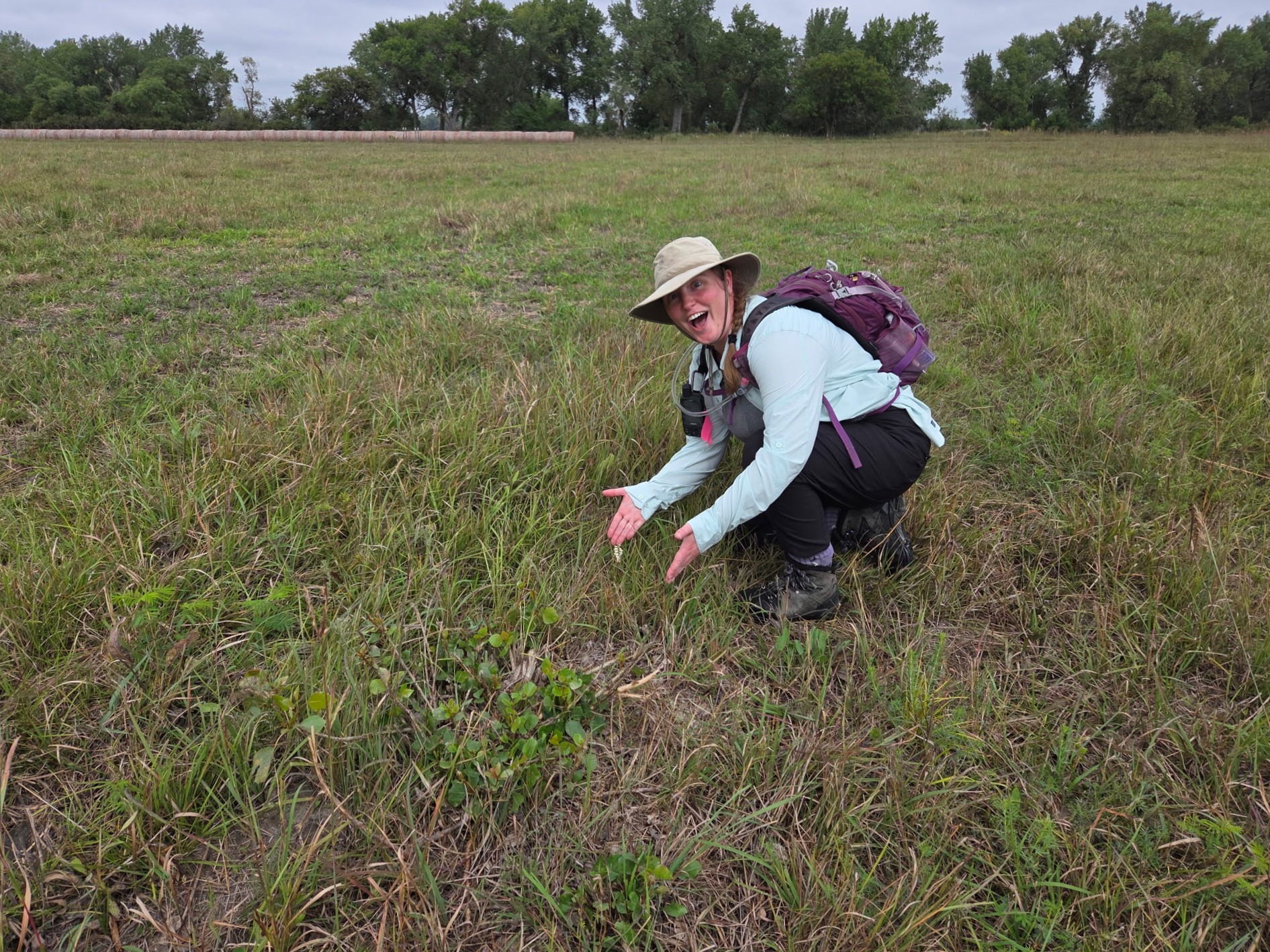
A photo of Katharine, who is very excited to have found her first Spiranthes orchid ever – in a hayed and grazed prairie restoration, too! Visual signs (plus the wonderful smell) suggest it’s S. magnicamporum, we are hoping to do genetic sequencing to confirm.

Pivoting from habitat conservation to species conservation is making me see opportunities everywhere for these two branches of conservation to join forces and accomplish more together. Botanical gardens do great focused conservation work, but I think we’re ideally situated to do more, and bridge the worlds of plant conservation research and plant conservation in practice. To illustrate, I’ll briefly describe a project we started this year and how we hope to scale up from lab-based conservation methods to more at-scale restoration and management of imperiled species.

Woolly milkweed

Some of you may know the woolly milkweed (Asclepias lanuginosa), but most folks I talk to haven’t heard of it – I hadn’t either until I joined Lauritzen! It’s small and unobtrusive, and most sightings are widely scattered individuals. More critically from a conservation standpoint, most records say it rarely flowers or sets seed. I’ve only found a couple papers in the scientific literature about it, which suggest the species is highly clonal (potentially a sign of low genetic diversity), and is difficult to obtain seeds for. In Nebraska, it’s our earliest flowering milkweed (sometimes late April!), and consensus is that it’s declining across much of its range (see screenshot).
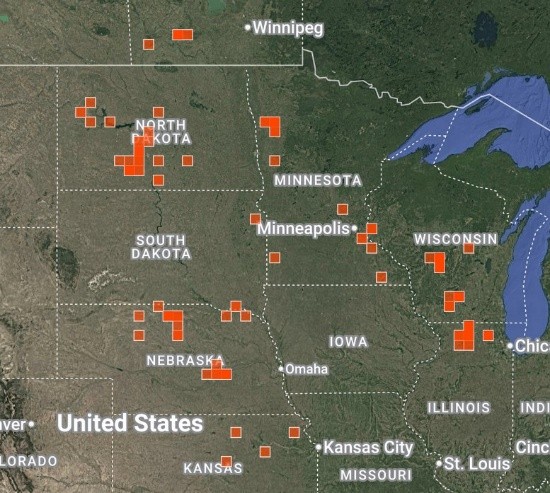
A screenshot of documented woolly milkweed occurrences on iNaturalist. Retrieved 11/14/25.

Woolly milkweed flowering at Gjerloff Prairie, Hamilton Co., Nebraska. Photo courtesy of Prairie Plains Resource Institute/Sarah Bailey (2025).

We chose to begin conservation work on the woolly milkweed as it’s considered globally vulnerable (G3, NatureServe 2025), little is known about it in Nebraska, and Asclepias species are charismatic thanks to their association with monarchs. There is a little overlap between the earliest spring migrating monarchs and Nebraska woolly milkweed blooms. It’s also possible that monarchs lay eggs on plants that have already bloomed, but we don’t know yet. If anyone has insight on this, please reach out!

Among other locations, we’re working with Prairie Plains Resource Institute to conserve a population of woolly milkweed at Gjerloff Prairie (loess hills remnant) hear Aurora, Nebraska. This year we tackled two objectives: setting up a long term monitoring study, and attempting an embryo rescue protocol if there were any seeds (more details on that below). We surveyed four known colonies at Gjerloff, which totaled 165 stems. The average flowering rate was 18%. Only one seed pod matured; a few others started to form then aborted.

Plant #118 (left), the one individual that successfully produced a pod in 2025. Plant #117 (right) started to form a pod but it was either aborted or eaten by a “helpful” critter. Photos courtesy of Prairie Plains Resource Institute/Sarah Bailey (2025).

In additional to annually counting all plants and blooms, we marked 39 plants with metal aluminum tags to track more in-depth over time, allowing us to calculate population demographics, growth, and any responses to management. To me, this was a critical first step – population surveys of imperiled plants are common, but I rarely see them focus on management, which has implications for our ability to steward these plants in the long term. Not only that, it can take years to understand complex processes like fire and grazing.

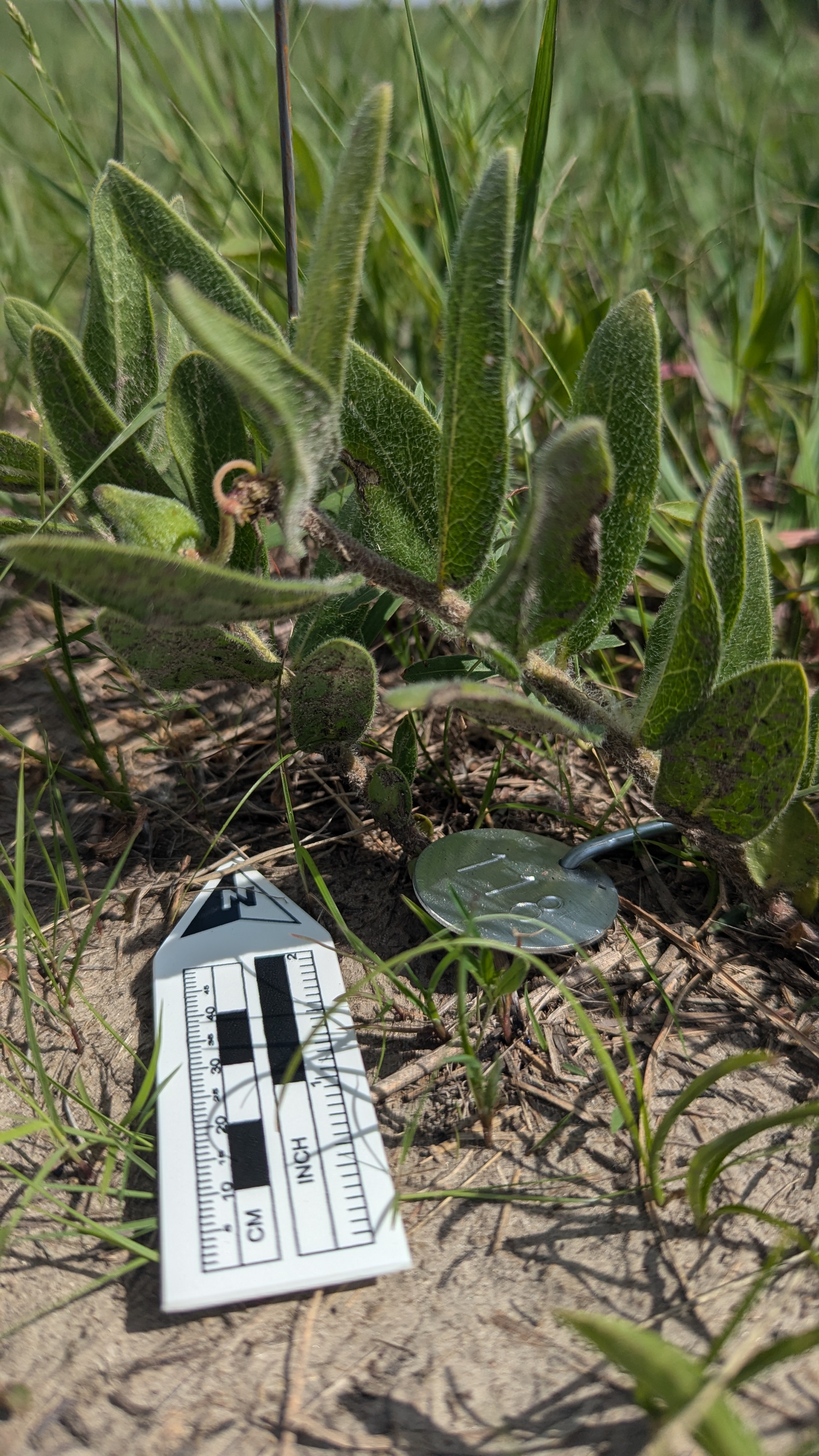
Katharine rolling up the transect tape after tagging woolly milkweed plants for long-term study (right), and plant #118 with immature pod forming. Photo on left courtesy of Allison Butterfield (2025).

The one seed pod from plant #118 was harvested in the second week of July and brought back to Lauritzen for an embryo rescue attempt. No seeds from a pod produced by this population a few years ago germinated via typical Asclepias propagation procedures, but that doesn’t necessarily mean they are completely inviable. Sometimes the embryos are capable of growth but are not vigorous enough to break the seed coat. Removing the embryos and placing them into a sterile (in vitro) environment on a nutrient-rich growing media has yielded higher germination and growth rates in other milkweed species, so we decided to try it. One paper also found harvesting the seeds earlier than normal (before the pod splits) improved germination with the embryo rescue method.

The seed pod contained 54 pale but fully formed seeds, and 11 underdeveloped seeds. We sterilized the outside of the pod with ethanol, then sterilized the seeds themselves to reduce any chances of contamination in the sugar-rich growing media.

Sterilizing the seeds from #118’s pod. We were so afraid the pod was going to have nothing in it!

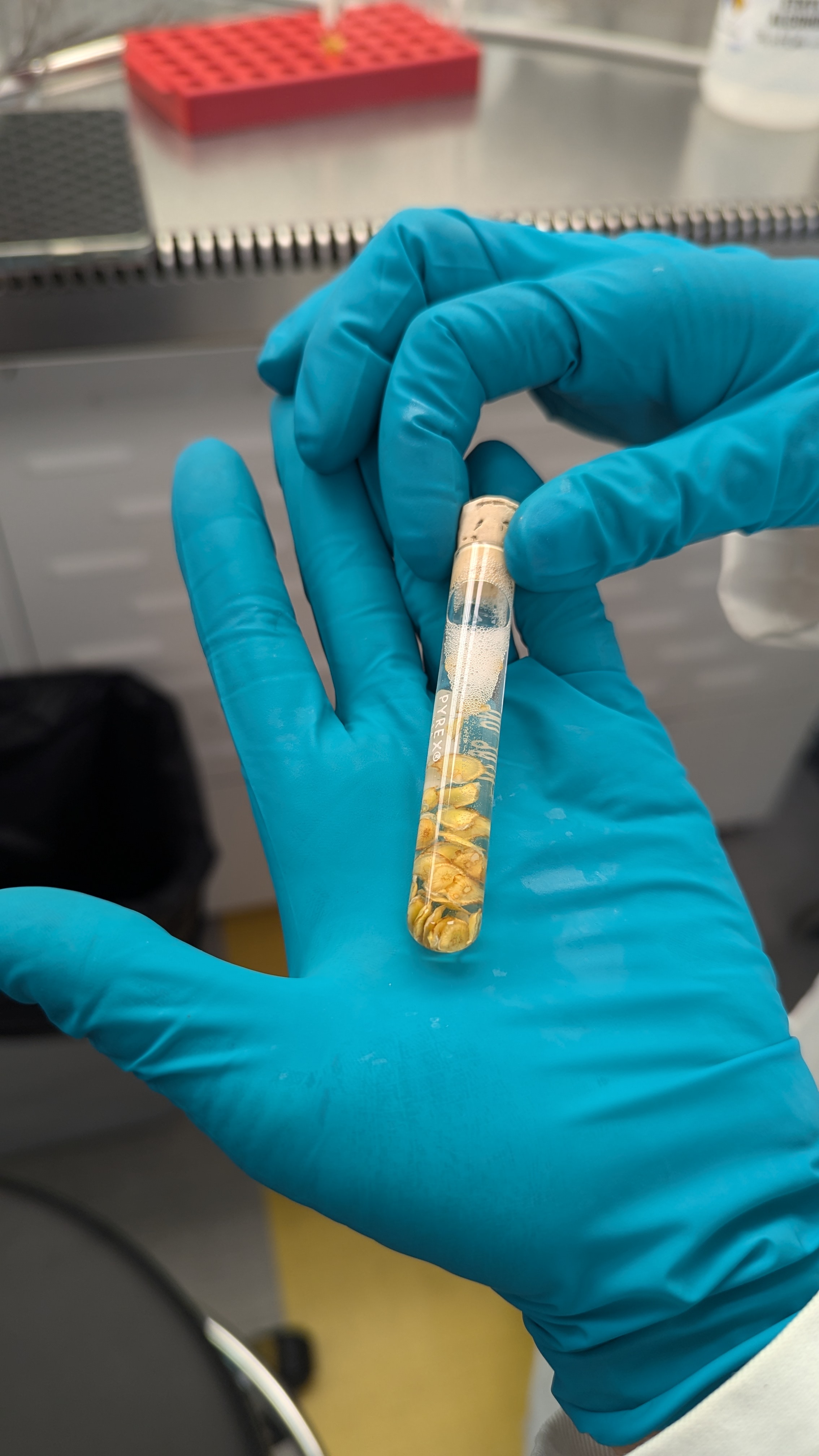
Without going too much into the remaining details, we carefully excised the embryos from the seeds under dissection scopes and placed them on the growing media into individual test tubes to eliminate potential cross contamination. The tubes were then places under grow lights in our tissue culture room, and we impatiently waited to see if they would grow. We also did the embryo rescue on a dozen butterfly milkweed (A. tuberosa) seeds from around the gardens, as a comparison.

Embryo excised from a seed under dissecting scope (left); test tubes with excised embryos in climate-controlled tissue culture room (right).
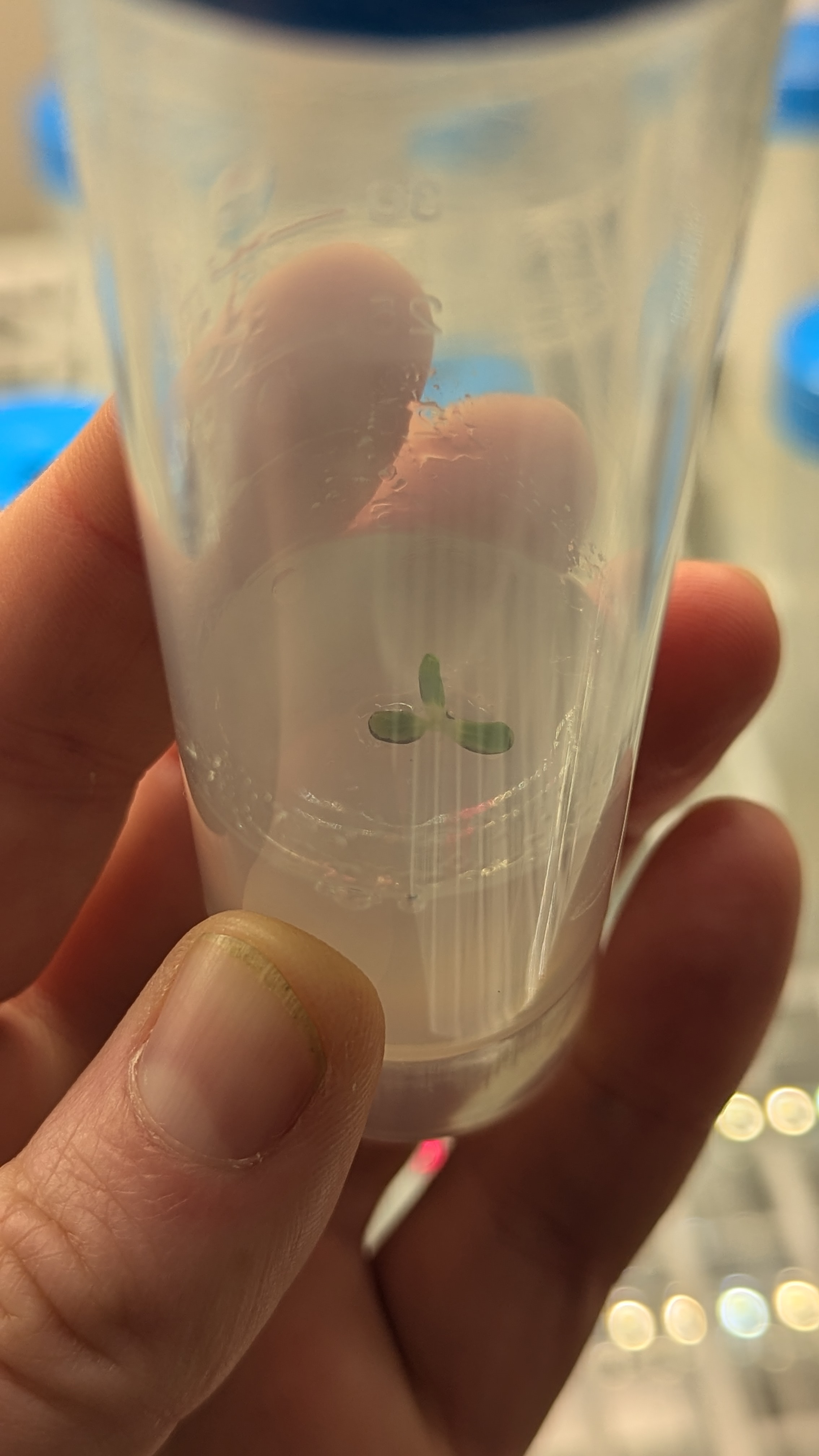
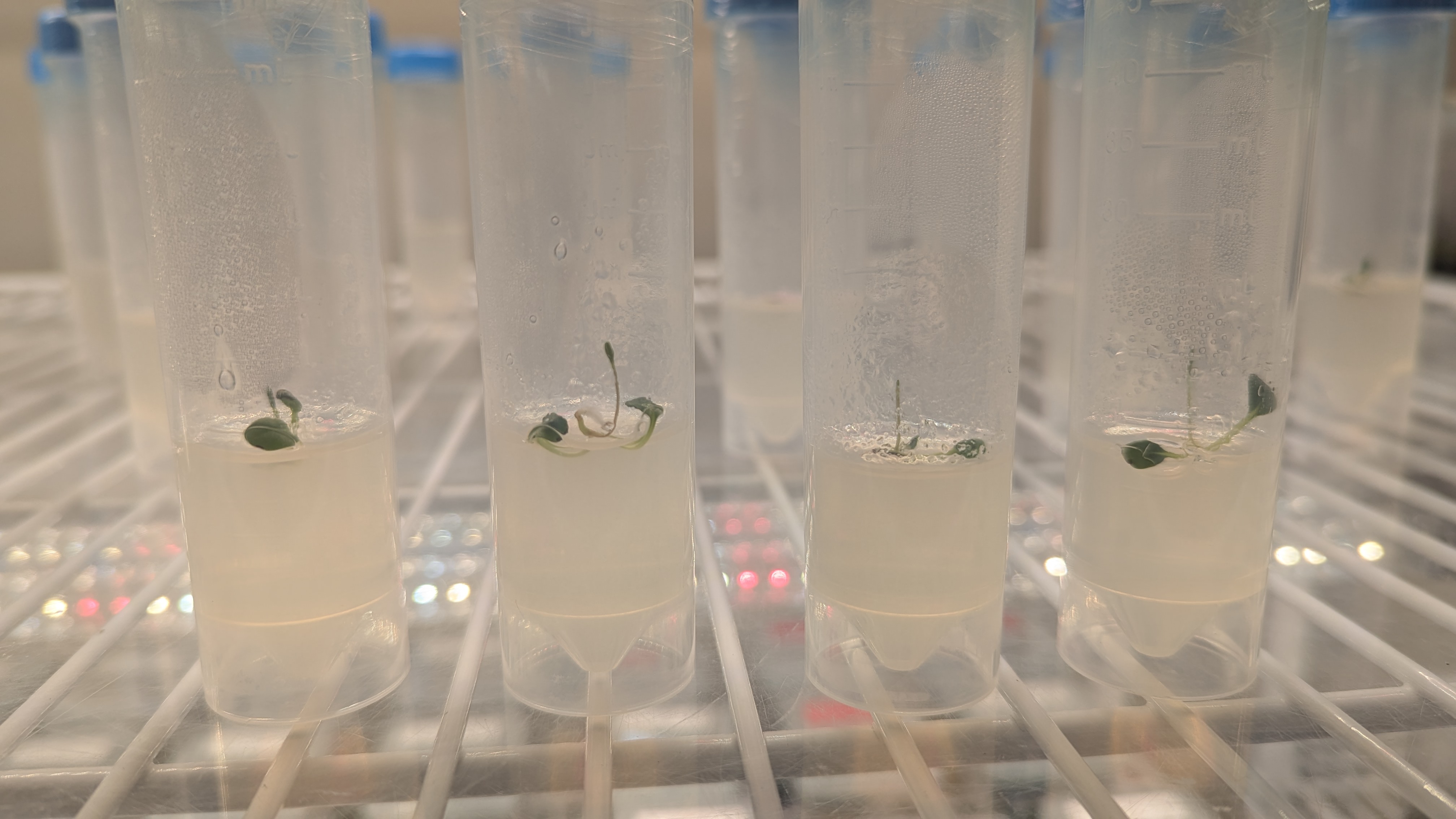
Woolly milkweed embryos forming cotyledons and initial shoots.

We soon transferred the embryos to new media, and gave half some hormones to stimulate root and shoot production as some seemed to be having difficulty getting started. Fun fact, the hormone is actually the herbicide 2,4-D, just in miniscule amounts instead of the larger dose that forces plants to grow too fast to sustain.

Within about 8 weeks, most shoots had turned into what could only be called little frankenplants. They produced clusters of very thin, weak shoots instead of a single stout shoot like the butterfly weed seeds did. We think this is either 1) a reaction to the 2,4-D or 2) some indication of lack of vigor, potentially from low genetic diversity.
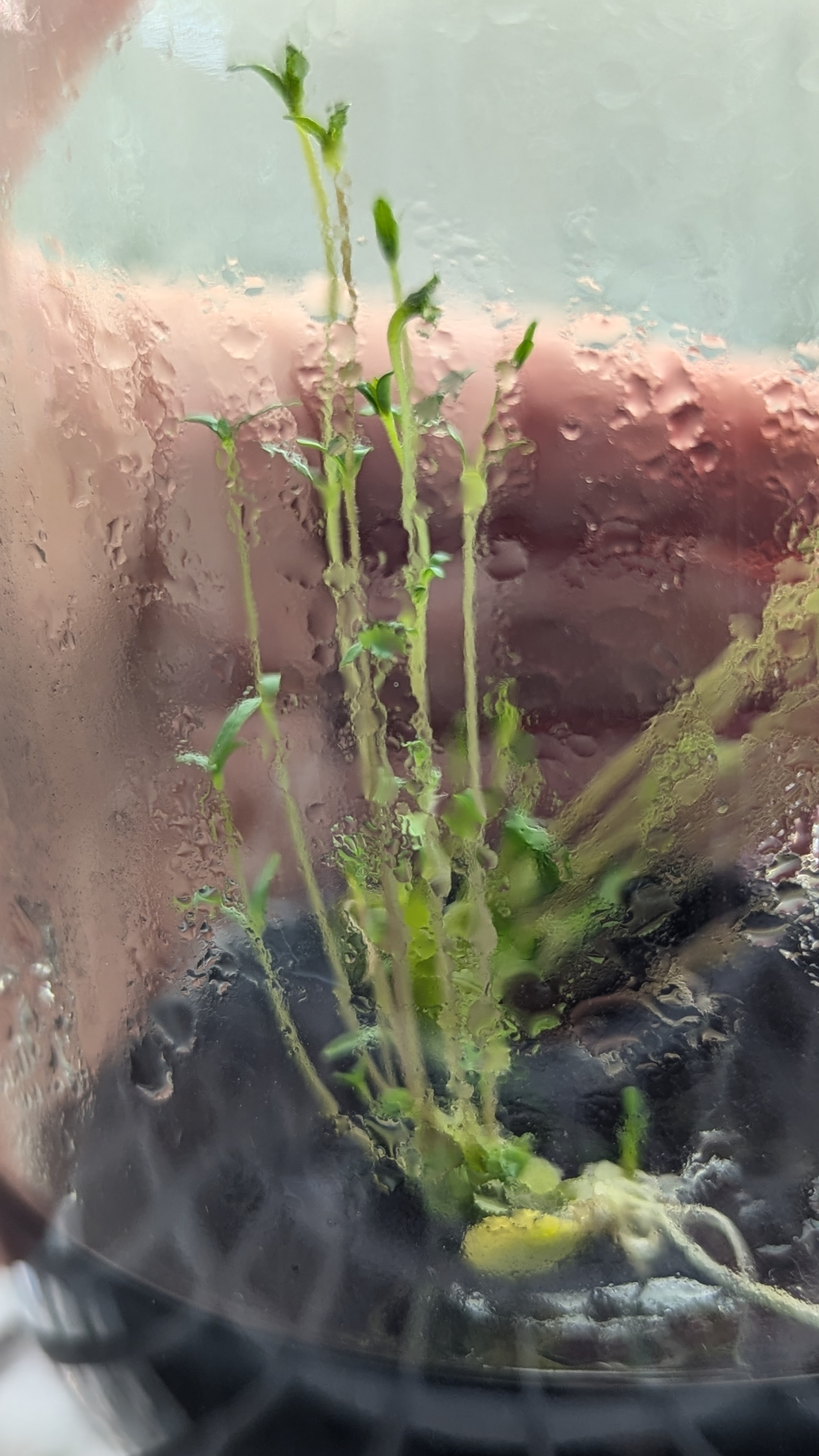
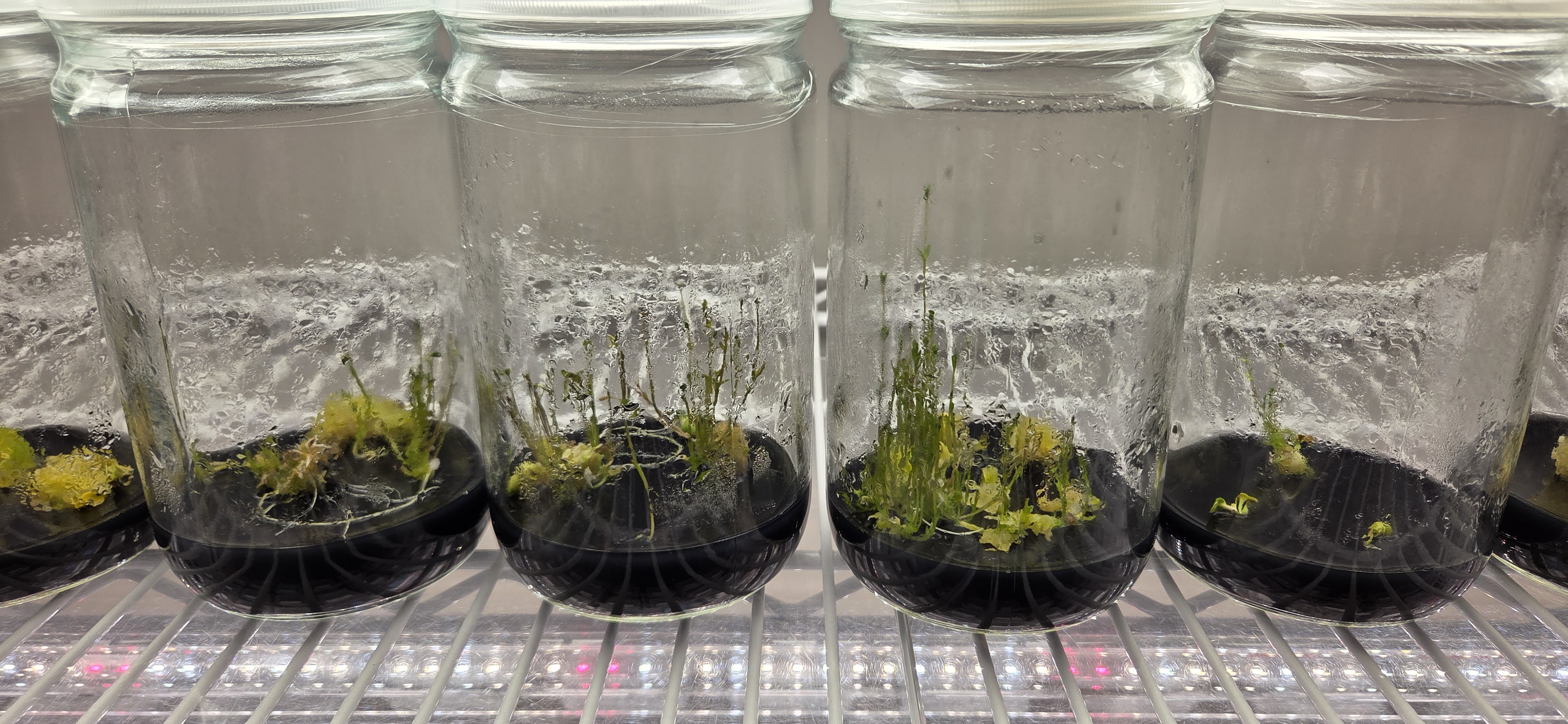
Lanky woolly milkweed seedlings growing many shoots – but hey, we were thrilled they were growing at all, so honestly we’re not complaining – just puzzled!

With winter coming on, and transitioning out of in vitro conditions being the most stressful part of tissue culture-based conservation methods, we will be planting these little weirdos into a well-drained potting mix and keeping them under grow lights in the lab throughout the winter. Some have developed great root systems, so we hope they’re ready to survive a little more independently.

Woolly milkweed roots forming in in vitro growing media.

Ok that’s great, you might be thinking, but how is this going to help us conserve woolly milkweed out in the real world?

This method may not be a silver bullet for the species; in fact, I highly doubt it. However, these are a few dozen plants growing that likely wouldn’t have been able to otherwise. A few dozen plants could make a world of difference down the road, especially in conjunction with other methods like cross pollination tests, seed bulking, and experimental reintroductions.

In conjunction with population surveys aimed at understanding responses to factors we can control like management and planting location, I believe lab-based methods like this can increase our capacity in the long run to produce more individuals for future restoration projects to stand against factors we can’t control. And what is species conservation if not seeking strength in numbers?

I believe this is the sweet spot where botanical gardens can fill a gap in conservation.

I know so many land managers who care about the rare species on their property, but simply do not have the time, money, resources, or training to prioritize the good of the individual species over the good of the whole. And, speaking as an academically trained scientist, academia simply doesn’t incentivize this type of research. Tiny sample sizes, uncontrollable factors like whether you’ll even be able to find the plants, species-specific methods that don’t generalize – these are nightmares for the classically trained scientist pursuing a research career.

Botanical gardens occupy the happy middle – we have research labs to deal with finicky or beleaguered species, and access to the horticulture community, which has been obsessing over how to grow difficult species for ages. We also don’t have publishing expectations nearly to the same degree that academic researchers do, and can afford to target “niche” journals and publish atypical, but still peer-reviewed research like propagation protocols, data papers, and natural history notes.

Yes, I know some gardens are already doing this, though in my (albeit somewhat green) opinion not nearly enough, and not nearly as many that should. In fact, in just over a year I’ve already heard one too many talk or seminar about rare species conservation that either mentioned land managers and long-term habitat management as an afterthought, or didn’t mention them at all.

So, I reached out to Bill and asked him if I could write a post for the GRN, introducing some of the work we are and will be doing in Nebraska, but also to post a request: land managers, what species are on your properties (or aren’t currently, but used to be, or are right nearby) that you would love to see in your restorations and habitats, but you can’t figure out how to grow them? How could people with access to botanical garden resources amplify the work you are already doing? Are there other thoughts sparked by this piece that stand out to you? If so, please reach out! I can also be contacted by email at k.hogan@omahabotanicalgardens.org.
Posted in Uncategorized | Tagged , , , , , | Leave a comment

Tall Goldenrod Management Study

Year-Three Results – August 2025

By: Karen Glennemeier – Habitat Research LLC
and Jeff Weiss – Living Lands Conservation Company

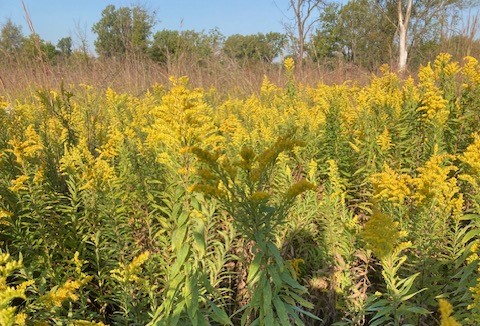
Tall goldenrod (Solidago altissima) has become one of our most aggressive invasive species, especially in newly-opened woodlands and young prairie restorations in northeastern Illinois.  While dense monocultures of this native species may have been present in patches across the historic landscape, most of us agree that we don’t currently have the luxury of allowing it to run its course within our small, fragmented natural areas.

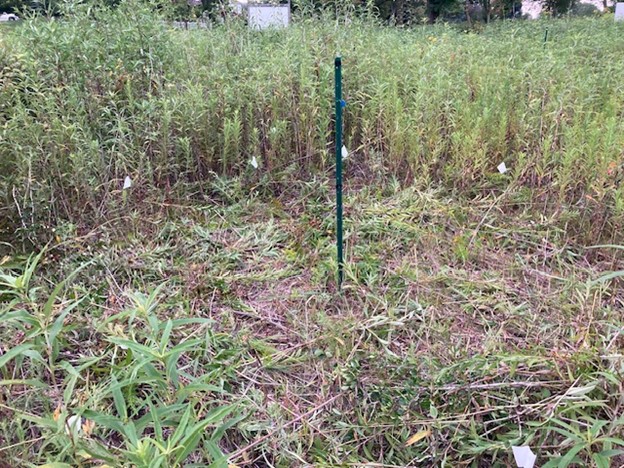
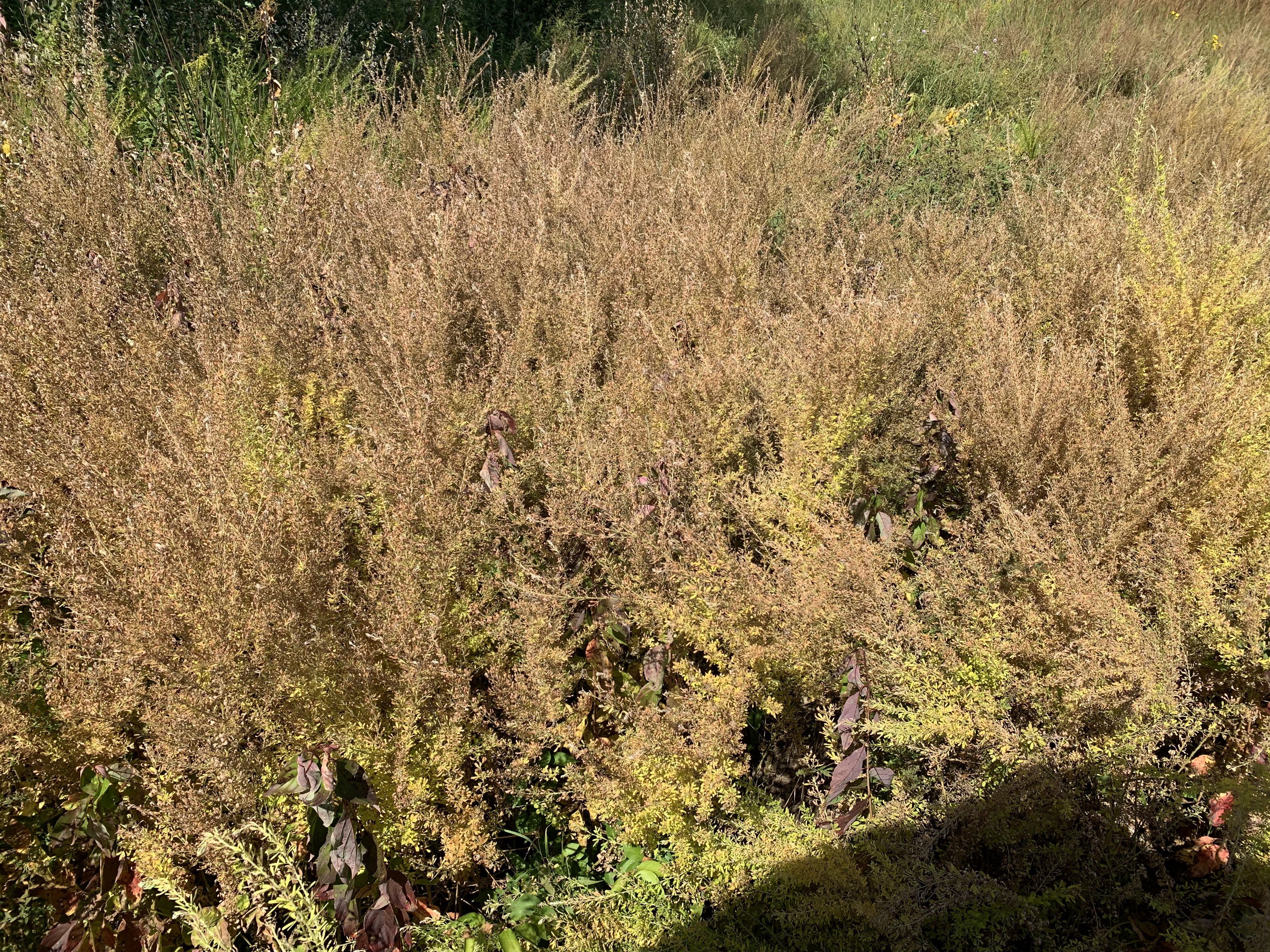
Tall goldenrod can be abundant in newly-restored woodlands and prairies in Illinois

We’re all trying various control methods and sharing our anecdotal successes and failures. This study set out to test a few of the more common methods systematically, to see what more we could learn.

We focused on seven different management methods commonly used (or newly of interest) in mesic to wet-mesic prairies.  We would have liked to include more treatments and combinations of treatments, but we needed to keep the study manageable in scope!

We’re only three years into the study, so these results are very preliminary, but we thought we’d share what we’ve got so far.

The treatments consist of eight circular, 9 m2 plots. Within each plot, we have conducted each of the following treatments annually since 2023:

  1. Control
  2. Wood Betony – scattered approximately 500 stratified seeds of Pedicularis canadensis.
  3. Dodder – scattered approximately 25 seeds of Cuscuta glomerata
  4. Both Wood Betony and Dodder, as described in #2 and #3 above.
  5. Mow without seeding – mowed all plants within the plot (brush cutter, scythe, or clipper). 
  6. Mow with seeding – mowed as in #5 above and scattered 1.5 cups of cleaned seeds. Seeds were Citizens for Conservation’s prairie “power mix”  (see species list below).
  7. Herbicide without seeding – spot treated tall goldrenrod with foliar application of selective herbicide (1% clopyralid).
  8. Herbicide with seeding – spot treated as described in #7 above and spread seeds as described in #6 above.  
Herbicide application and vegetation clipping in the treatment plots.

In our mowing treatements, we cut everything in the plot in order to mimic the typical mowing control of large goldenrod monocultures.  In our herbicide plots, we only selectively herbicided tall goldenrod, again to mimic the way this treatment is typically employed (mostly in smaller sites).  This difference means it may be harder to draw apples-to-apples conclusions about what’s behind the results, but ultimately what matters most is studying the methods that people are actually using in the field, so we’re ok with the trade off.

One of our “cut” treatment plots.

We are monitoring two responses to the treatments:

1. Tall goldenrod abundance

2. Overall floristic quality

To monitor the response to our treatments, we estimate percent cover of all species within four 1/42m quadrats within each test plot. We first took data in early August, 2023, and then we cut and herbicided the treatment plots the following week. In December of 2023, we spread seeds in the seeded plots.

We repeated this monitoring and treatment in 2024 and 2025.  We have four replicates, doing all eight treatments at four different sites in Cook County, IL.

It’s very early, and we plan to continue the study for at least another five years, but here’s what we’re seeing so far:

(Error bars are standard errors of the mean.  If they overlap, this roughly means the differences are not statistically significant between treatments.)

The main takeaway thus far seems to be that selective control plus supplemental seeding is the most effective strategy.  If one wanted to avoid the drop in FQI with the herbicide-only treatment, which presumably is due to underground collatoral damage, one could try selectively cutting rather than selectively herbiciding, as some stewards do (typically using scythes).

Other thoughts:

1. We haven’t yet seen any betony germination, so it’s too early to know its impact, although the slow pace certainly suggests betony is not a quick solution to an emergency infestation.  Anecdotal reports from other stewards suggest it may be a very effective long-term solution, though.

2. Dodder has not yet been recorded in all of its treatment plots, so, as with betony, we are still waiting to see its full impact.  Anecdotal reports from other stewards suggest it is a very promising management tool, although germination of the seeds can be hit-or-miss, so this could limit its effectiveness until we figure this part out.

3. Oddly, cutting alone isn’t affecting FQI after two years. We’d have expected it to suppress FQI, since we’re cutting everything in the plot. We’re not sure what to make of this and are going to see how it plays out over time.

Thanks to Openlands for supporting this study and to the Forest Preserves of Cook County, ComEd, Citizens for Conservation, and the Village of Buffalo Grove for site access and research permission. Thanks for field assistance to: Luke Dahlberg, Adhya Garapati, Deepthi Garapati, Sue Gorr, Elizabeth Plonka, Karl Rosenberg, Ken Schaefer, Dana Sievertson, Anne Stake, and Agnes Wojnarski.

Seeded Species List

Allium cernuumNodding Wild Onion
Anemone cylindricaThimbleweed
Asclepias syriacaCommon Milkweed
Asclepias verticillataWhorled Milkweed
Bouteloua curtipendulaSide-Oats Gramma
Bromus kalmiiPrairie Brome
Cirsium discolorPasture thistle
Coreoposis palmataPrairie Coreopsis
Elymus canadensisCanada Wild Rye
Eryngium yuccifoliumRattlesnake Master
Euthamia graminifoliaGrass-Leaved Goldenrod
Gaura biennisBiennial Gaura
Helianthus pauciflorusPrairie Sunflower
Heliopsis helianthoidesFalse Sunflower
Monarda fistulosaWild Bergamont
Oligoneuron rigidumStiff Goldenrod
Parthenium integrifoliumWild Quinine
Ratibida pinnataYellow Coneflower
Roegneria trachycaulaSlender Wheat Grass
Rudbeckia hirtaBlack-Eyed Susan
Schizachyrium scopariumLittle Bluestem
Silphium integrifoliumRosin Weed
Silphium laciniatumCompass Plant
Solidago junceaEarly Goldenrod
Sporobolus heterolepisPrairie Dropseed
Symphyotrichum novae-angliaeNew England Aster
Tradescantia ohiensisCommon Spiderwort

Posted in Invasive species | Tagged , , , , , | 10 Comments

Control of Lespedeza cuneata

By Jeff Horn, IL DNR district heritage biologist for Ogle, Winnebago, DeKalb, Kane, and DuPage counties based out of Castle Rock State Park

Lespedeza cuneata (commonly referred to as Sericea or Chinese bush clover) is a perennial wildflower introduced into the United States from East Asia. It can form dense colonies of plants in grasslands and open areas. It is also allelopathic and its seeds can remain viable for up to 20 years. These traits make it an unwanted guest in our prairies and natural areas. It is more common in southern Illinois but continues to expand its range across the northern part of the state. It is easy to identify with its unique leaf shape and branching structure.

My district with the Illinois Department of Natural Resources Natural Heritage division had been vacant for about 20 years when I started in the position out of Castle Rock State Park in 2024. Sericea was present in many of the prairie plantings at the park. Local conservationists had made the park staff and covering biologists aware of its presence a few years ago. With limited time and resources, growing season burns and spraying were done in a few plantings. This work had started to reduce the abundance of sericea in those plantings. The plantings that were not treated had high densities of sericea in some areas forming thick mats with only a few species of plants present.

I mapped the presence and relative abundance of Sericea throughout the park and developed a plan to combat the invasive plant.

Map showing the prairie recreations that contained sericea and the treatment method(s) used

Growing season burns were conducted on Aug. 20 and 23, 2024. Research has shown that growing season burns can offer greater control of sericea than dormant season burns. The growing season burn prevents the plant from going to seed that year, but also reduces its chance of survival over the winter. All fire scarifies its seed and increases germination, so these burns also help deplete the seed bank faster. It is important to weigh the potential impacts of conducting a growing season burn on the other life in the prairie as they can negatively impact several species. I’d recommend consulting with other professionals or biologists before taking this approach.
With the help of the park staff and other INDR staff, we began backpack spraying in July 2024. We focused our efforts first in the planting that had been burned in March. It became apparent quickly, that we would need more resources, so we reached out to Nachusa Grasslands (TNC) for assistance. Fortunately, Nachusa was able to provide a tractor with a 50 gallon sprayer and also sent a team of 2 people with backpack sprayers for a couple days. This was critical for the effort as the tractor allows us to spray perched above the tallgrass prairie plants and gives a better vantage point for finding the plants to be sprayed.

Any areas that could not be sprayed by mid-Sept. were mowed down to prevent plants from going to seed. Then, we focused on the plantings that were burned in August with the same strategy, spraying as much as we could, then mowing the areas that were too dense to burn/spray. The first spray applications were done using 2% Vastlan (Triclopyr choline). This application prevented the plants from going to seed, but probably only killed about 75% of the plants that were treated. We were able to obtain some Pastureguard (Triclopyr with Fluroxopyr) and the remaining treatments were done using 2% Pastureguard with MSO (1/2oz./gal.). The Pastureguard mix was very effective at killing the plant. Sericea that was sprayed would yellow and start dropping leaves within a week.

Photo showing Sericea treated with 2% Pastureguard with MSO.

We received more assistance for sericea control in 2025. Covia Holdings LLC hired contractors to spray sericea at Castle Rock, Covia, and Lutheran Outdoor ministries. All of these properties are connected and contain sericea in their prairie recreations. Nachusa Grasslands also offered the use of their tractor and provided manpower for burns and spraying. These partnerships are invaluable in our restoration efforts.

Growing season burns were conducted in 2025 on several plantings on Aug. 5,6. The units that were burned in 2025 were also burned in 2024 so the fuel loads were reduced, but the fire was still able to carry through the plantings. We were also able to do follow up burning in those units on a day with higher wind speeds and burn more of the areas containing sericea. The burn window in the growing season is long, but there are not as many burn days as you might think due to high humidity, rain, and lack of wind (August is the month with the lowest average wind speed in Illinois). So, if we had good conditions, we burned. August burns also allowed us more time to do follow up treatment in the fall. I plan to conduct burns in September in the future when the amount of sericea is reduced to a more manageable level. This might increase fire intensity and coverage. One of the plantings contains high densities of sericea and is more protected from winds than the other units; this unit was mowed down in September. After the fuels were allowed to dry, the unit was burned to reduce seed production and growth of sericea. Contractors were hired with the Covia funds to do foliar treatment of sericea and leafy spurge in the units that were burned.

Overall, these control methods have been highly effective in controlling sericea at Castle Rock. The plantings with higher grass components have had higher fire intensity and burn coverage, thus, higher rates of sericea control (90%). In the plantings with higher forb density and/or reduced winds, sericea control has been much lower. The areas that have been spot mowed have not had a reduction in density, but it has prevented the plants from going to seed. This will be important in the long-term management of the site. Pastureguard has been the superior product for sericea control for this site. It is worth buying this product even if you have Vastlan on hand.

There are also areas that contain ornate box turtles and sericea. We have avoided conducting growing season burns or mowing in these areas and used only chemical treatments. Currently, those areas have relatively low density of sericea, but, once they are burned (in the dormant season) I would expect seed germination to follow.

The author, Jeff Horn, with Adam Schubert – Castle Rock State Park site technician wrapping up a growing season burn

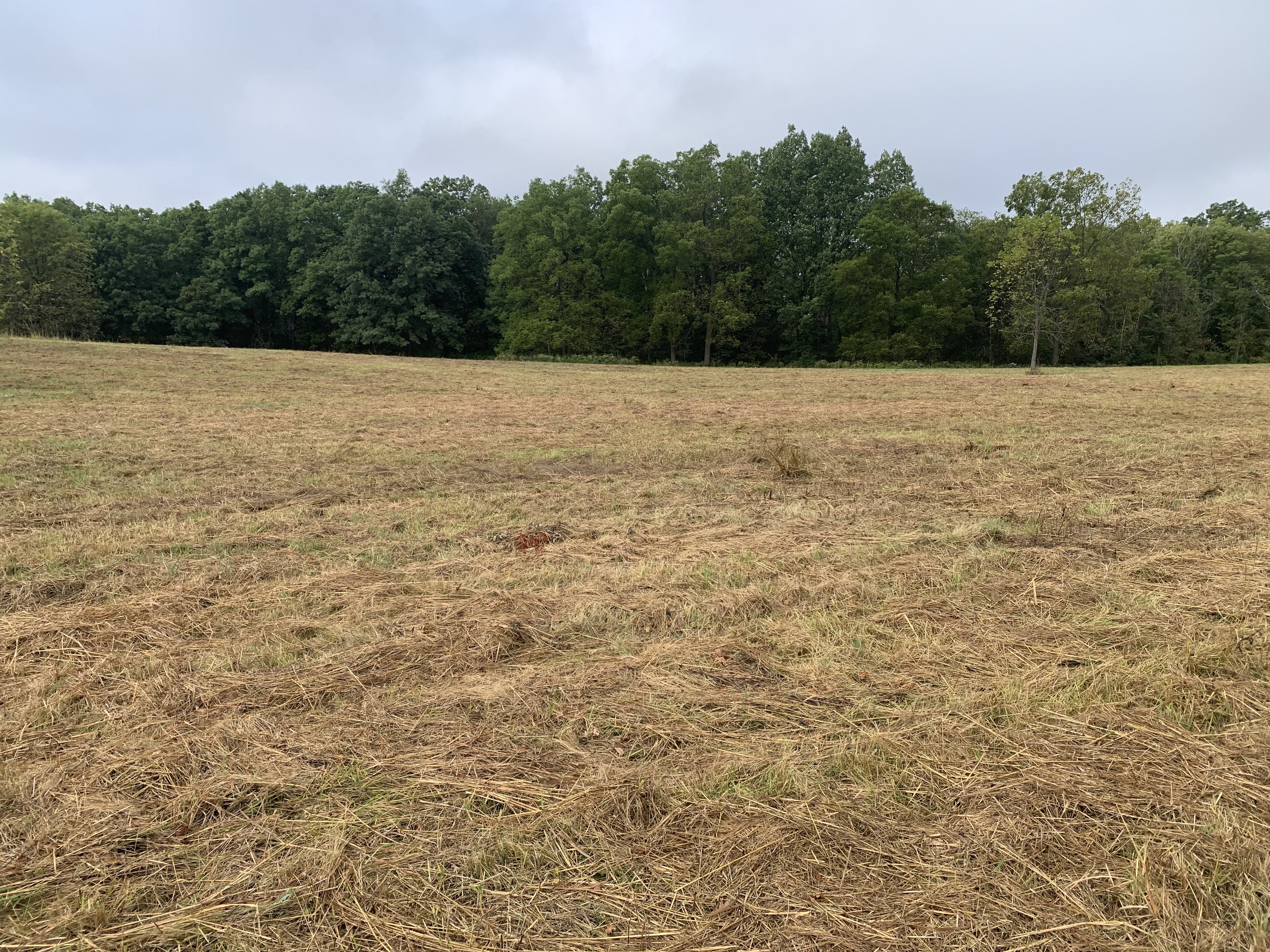
Prairie that was mowed prior to sericea setting seed

The same prairie was burned about 3 weeks after mowing. It will be interesting to compare the effectiveness of this treatment with the others in 2026.

Resprouting following a growing season burn. This is the optimal time to spray. The plants are relatively easy to find and it minimizes collateral damage to native species.

In the foreground – resprouts of sericea with stalks of burned sericea giving its presence away.  The stalks make it easy to find the resprouts.

The tractor with 50 gallon sprayer borrowed from Nachusa Grasslands (TNC). This was the ideal tool for spraying sericea in areas that had high vegetation.

Mature sericea stand. They can take over large sections of the prairie.

Contractor, Austin Webb, spraying resprouts in an area that had been burned during the growing season about a month prior to this photo.   

Here is a short video clip from a 2024 growing season burn done by Jeff: https://youtube.com/shorts/gVM5q2EyyOg?feature=share

End

Posted in Invasive species | Tagged , , , | 6 Comments

Managing against autumn olive

By Bill Kleiman

To get control of a dense invasive olive on 28-acres we brush mowed, seeded heavily, started a frequent fire program, and continue to make visits to apply basal bark herbicide to individual shrubs. We have been mostly successful.

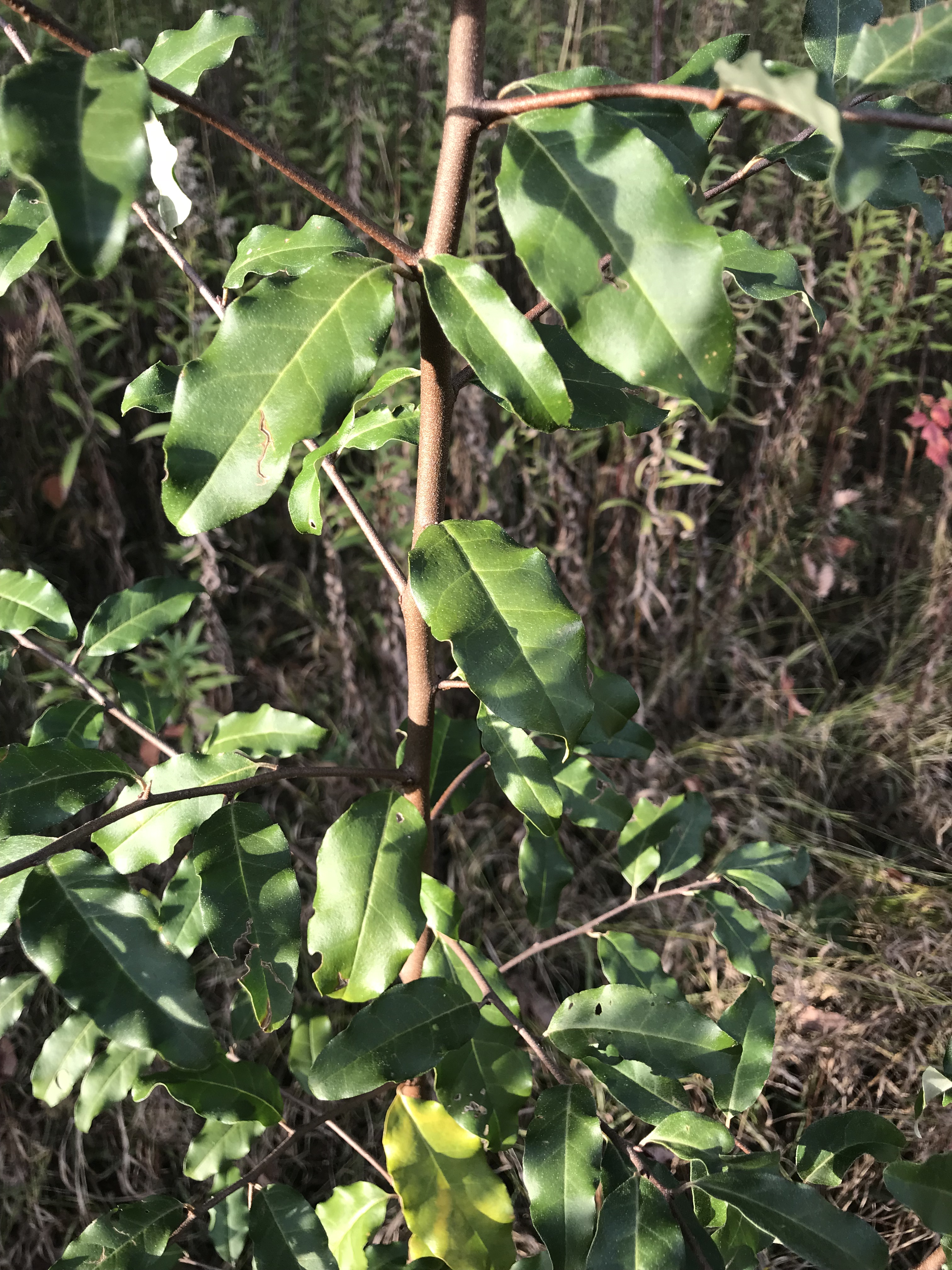
Invasive autumn olive is easy to spot from the stems which appear to be covered with rust or cinnamon powder. The stems also have false thorns which you will feel if you take your gloves off. The leaves are wavy with a silvery bottom.

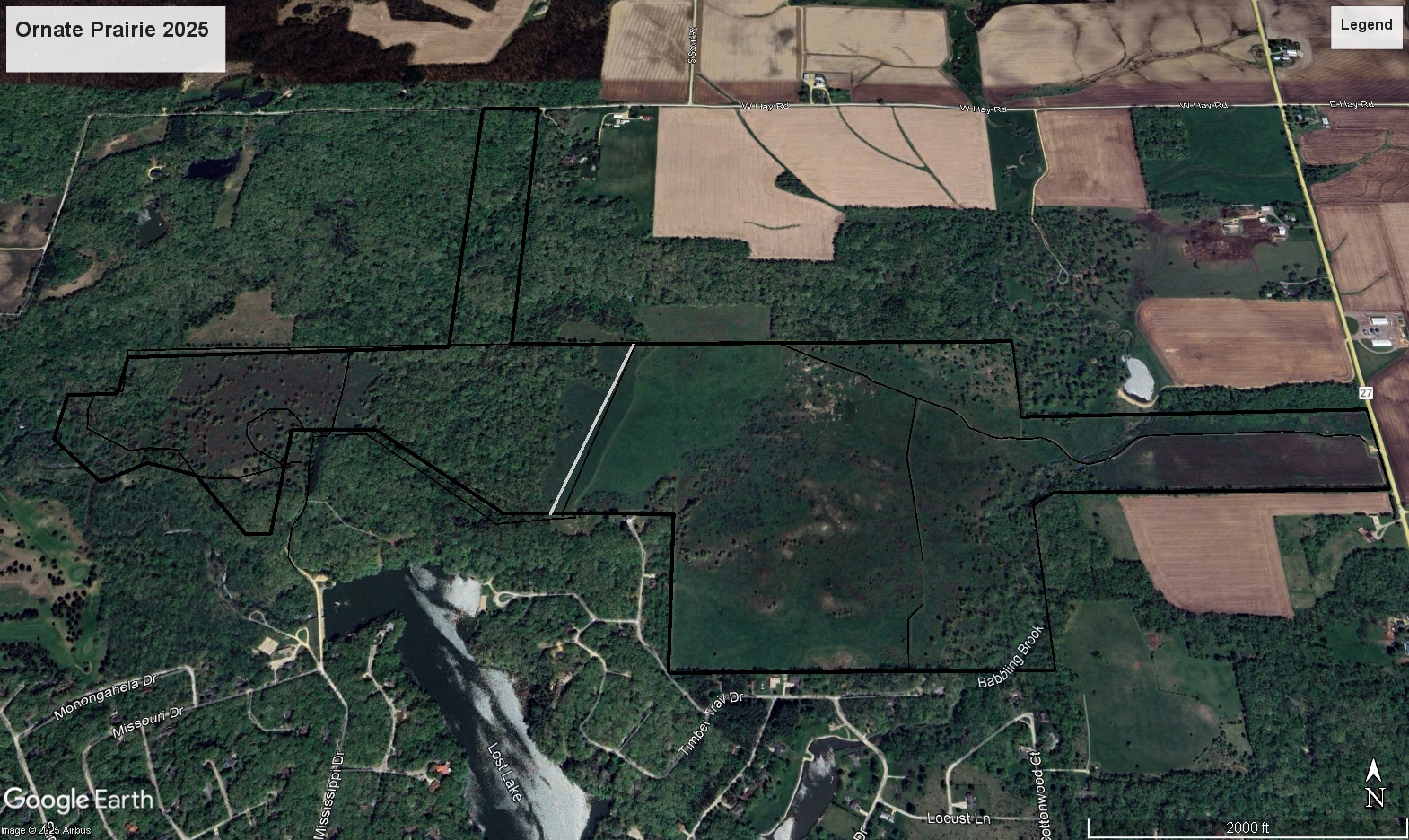
I could tell various stories from these three aerial views but today I will stick to autumn olive.

If you look on the left side of the unit where in 1939 there is open prairie and a dry gulch running east to west.

The invasive shrub Autumn olive, Elaeagnus umbellata, was likely planted in the 1980s. It was a thing back then to plant olive to make “great habitat”. Some places may still be selling this invasive. Please don’t.

In the 2010 aerial, olive is very abundant, which is the year TNC purchased this tract at Nachusa Grasslands.

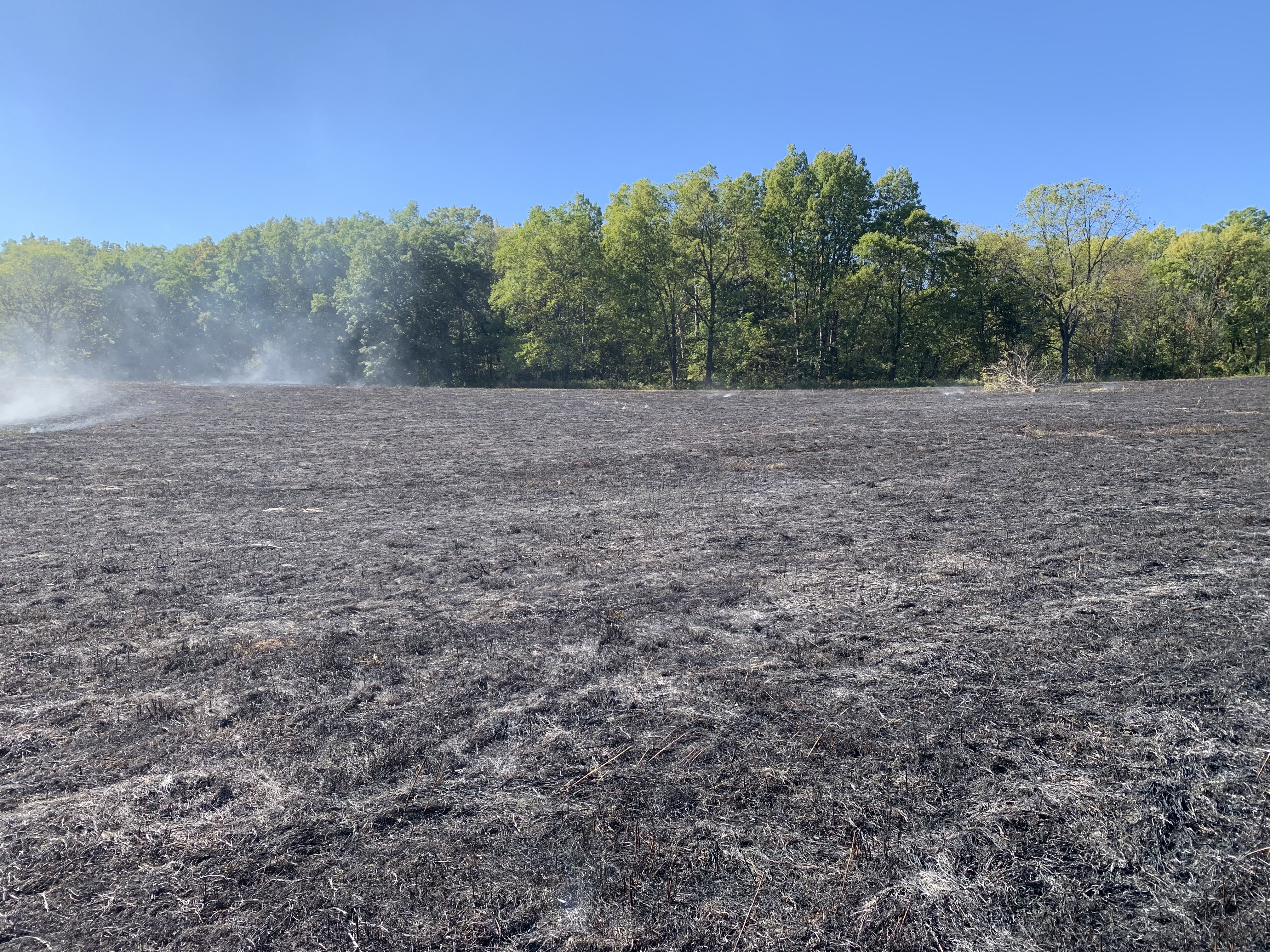
The third aerial shows shrub cover much reduced from brush mowing, herbicide, and frequent fire. Most of the woodies you would see today there are black oak, wafer ash, and some olive we are still chasing.

There were about 28-acres of very thick autumn olive. Above is an image from that tract showing where a brush mulcher had just passed through. The ground layer was so shaded that exposed soil would dominate a monitoring quadrat. But there were also still open patches of prairie here and there, so foliar spaying the olive was not chosen.

We hired this contractor to mulch the 28-acres in about a week. Back in 2010 it might have cost $15,000.

We used a skid loader with mulcher to also clear areas.

We assumed most of the mowed olive was going to re-sprout. That is what shrubs do. And we would need to use frequent fire, which would require a prairie to burn. So we planted a heavy amount of prairie seed harvested with an old combine from prairie plantings at Nachusa. This is a view into the combine hopper.

We planted about two full grain wagons of combine mix.

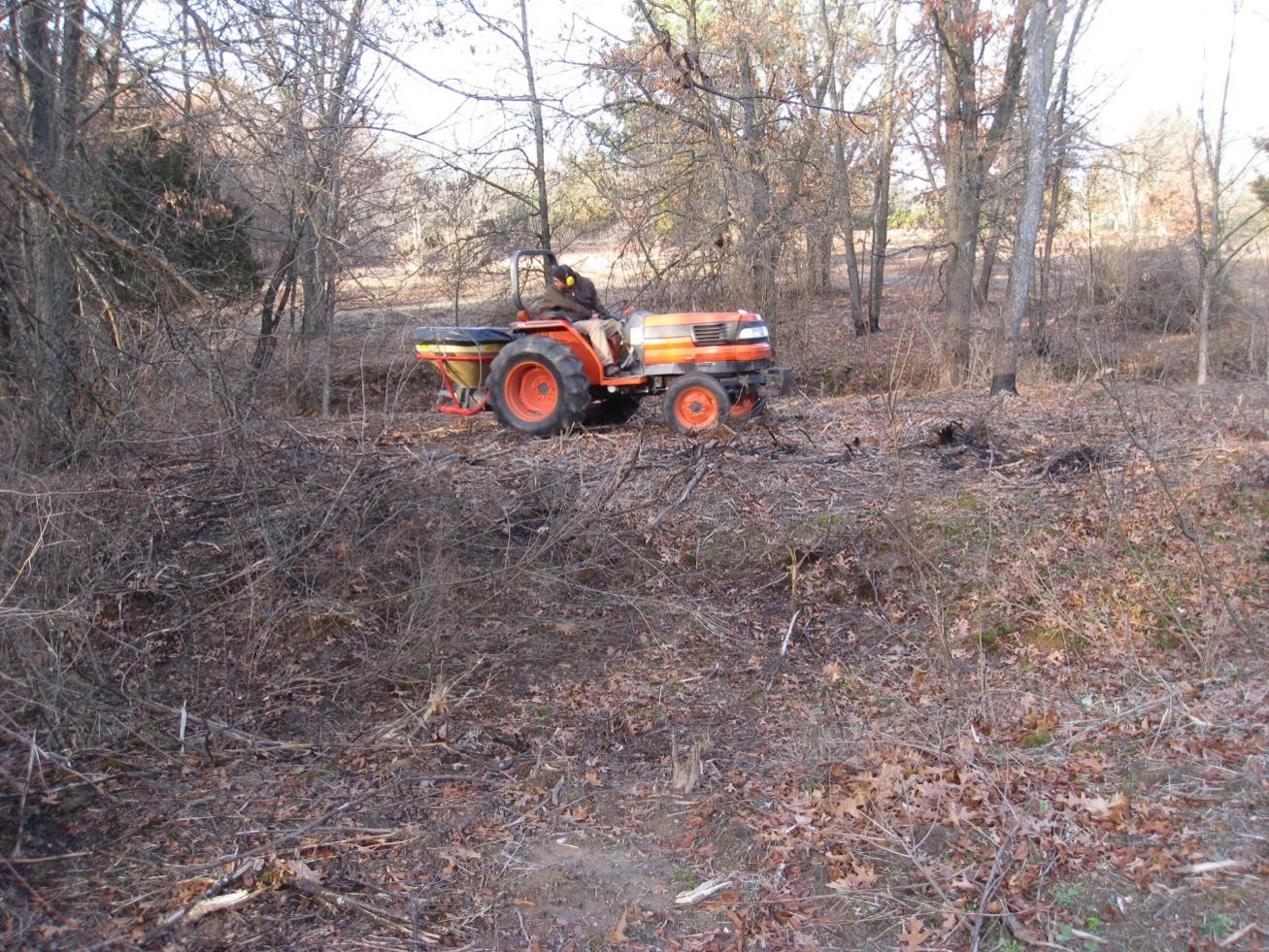
We used this little tractor with a pendulum seed broadcaster on the back. I think that is Mark Kruis on the tractor.

Mike Carr was a neighbor to the tract back then and as I went door to door to introduce myself to the neighbors I met Mike. He was so happy we had purchased the tract, stating he wanted to get involved. Boy did he. Mike became a major presence on this unit, working with other volunteers and seasonal crews. 15 years and counting. They wore backpacks and applied the basal bark herbicide (mineral oil with a broadleaf herbicide) to the bottom bark of each and every olive they could find. Basal bark herbicide is very effective on olive. You should get complete control of every plant treated. But how to find the time to get to each one? They repeated this work over 15 years with a pleasant can-do attitude.

Currently, there is still a bit of olive out there and we will keep going after it.

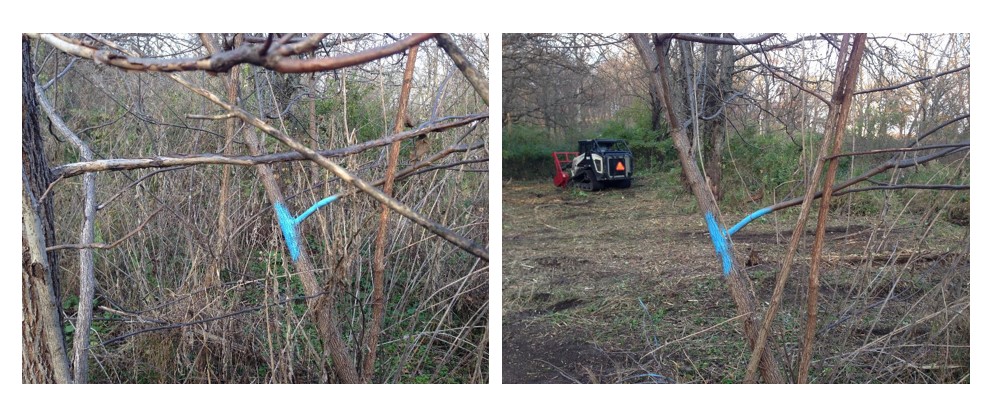
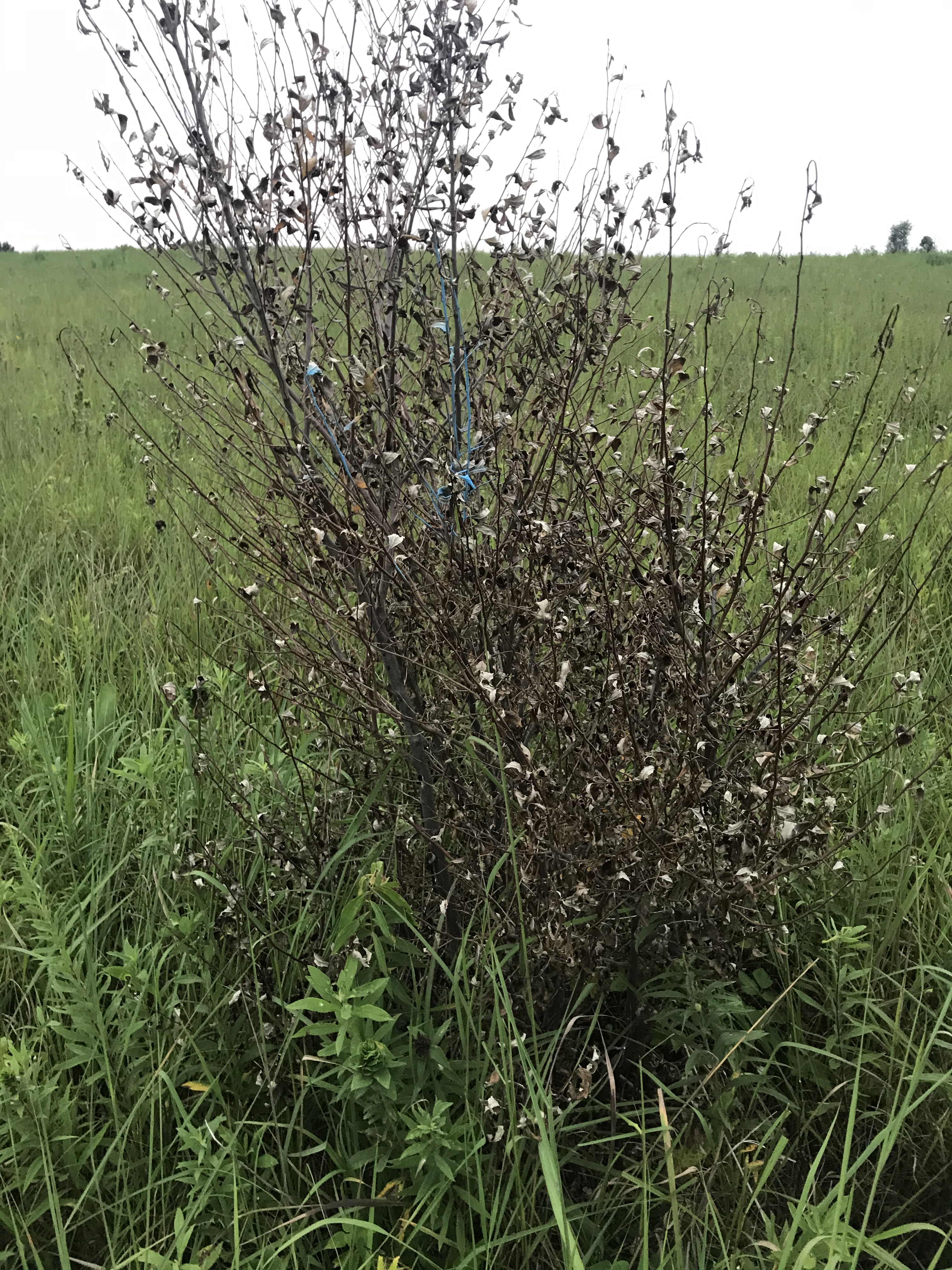
An olive shrub basal bark treated mid-July and crispy four weeks later. The blue paint is how I mark a hand full of plants so I can know an individual was treated.

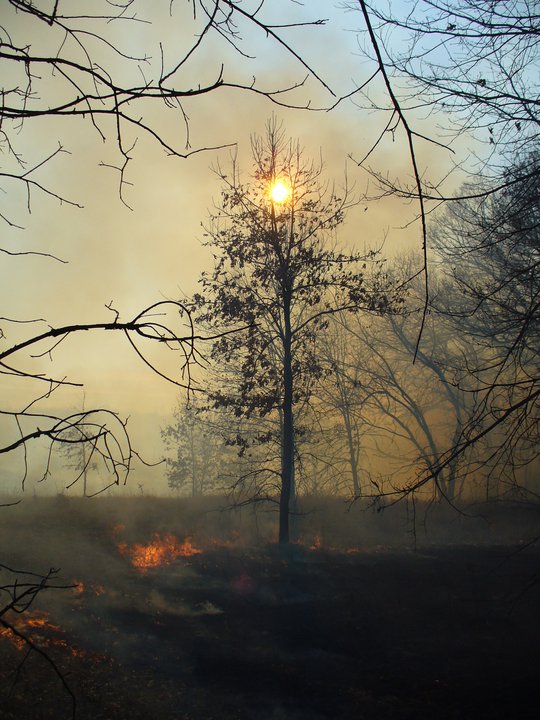
We use frequent fire at this unit to keep the shrubs in check. This image is from there.

August 22, 2012: Just two years after we started our work in this olive patch.

To find other posts about invasive shrubs on this blogsite just use the search bar on the site. And follow our blog by putting in an email address there.

Posted in Uncategorized | Tagged , , , , , | 5 Comments

Wicking cattails

Reported by Bill Kleiman

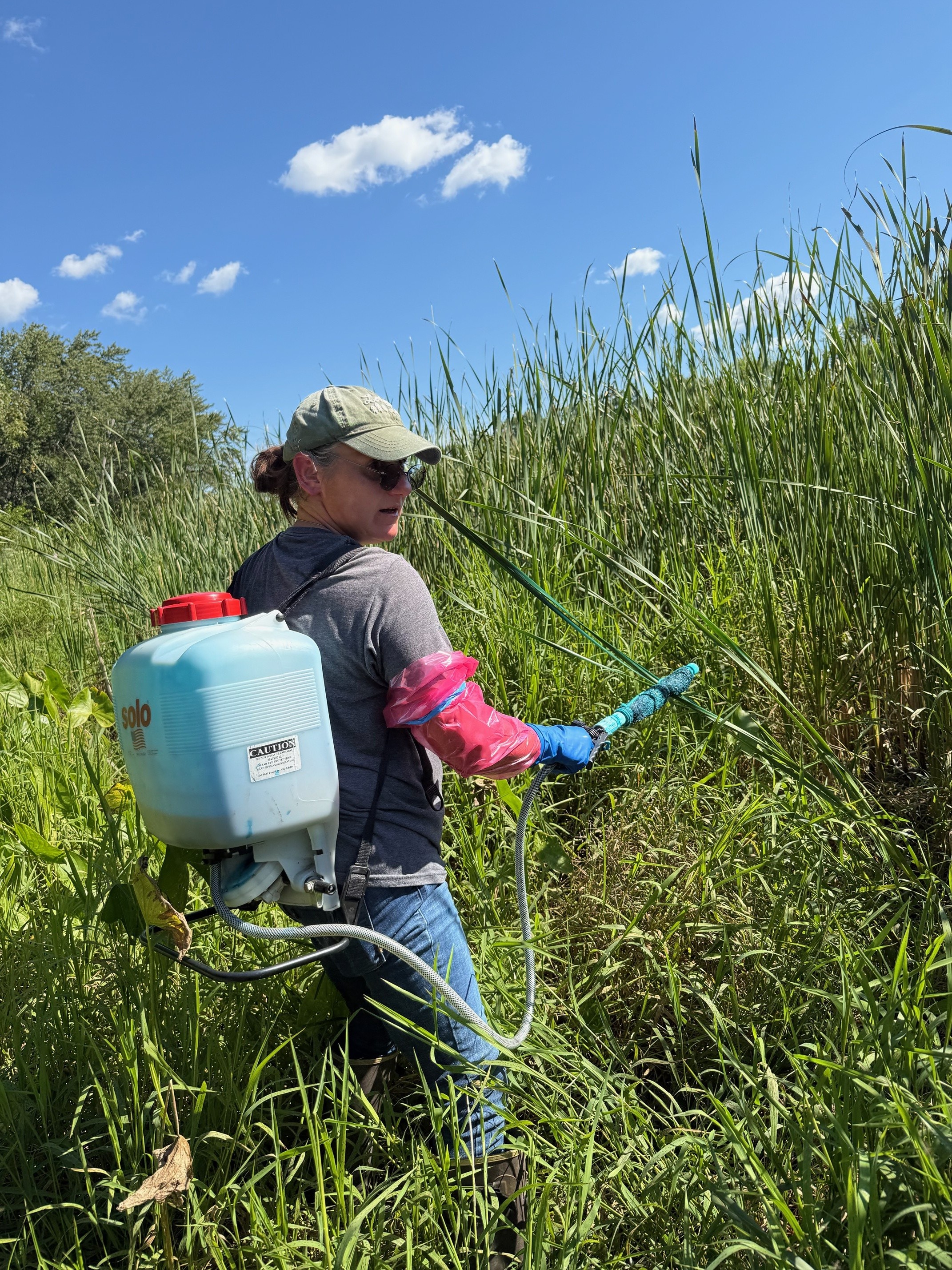
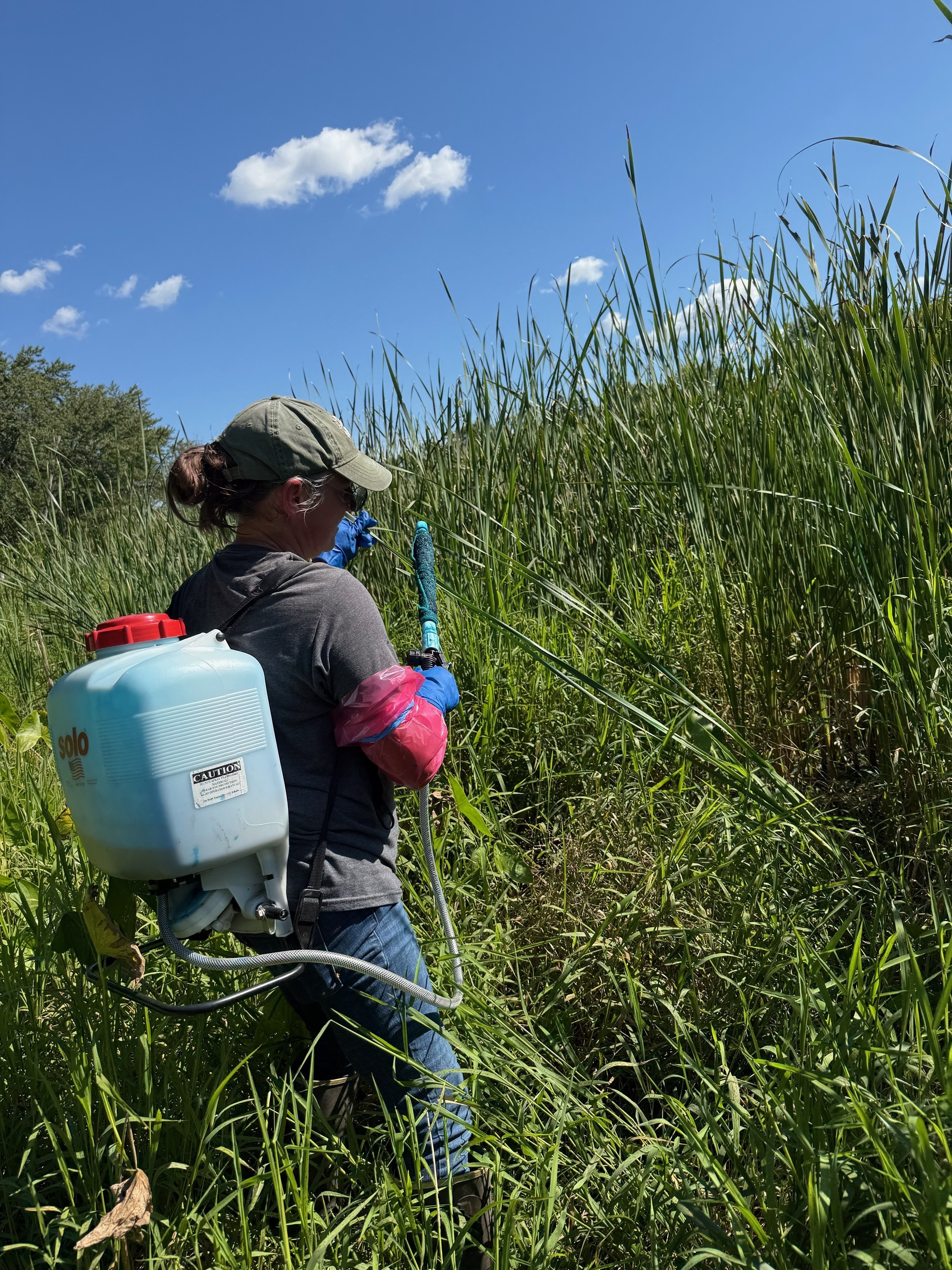
Agnes Wojnarski using a herbicide wicking wand on cattails. She used Aquaneat (glyphosate) with surfactant and blue dye. Label states up to 33% glyphosate for wick/wiper applications. A coverage of about half the plant gives good control. She used that backpack with only 2 gallons of solution for weeks.

Agnes says “the hardest part is to not get any herbicide on yourself. I use breeder gloves and extra thick gloves and take a break every 45 minutes to check my body. So far so good!  As long as you avoid wind and swaying cattails trying to touch your face.” 

Dana Sievertson says this wand design is by Stantec, a contractor in our region. It has a microfiber towel as the wicking pad. They store it in an empty bucket.

After treatment photos showing browned cattails:

Posted in Uncategorized | Tagged , , | 8 Comments

Shaw Nature Reserve – 2026 GRN Workshop – Job Opening

Mike Saxton – Shaw Nature Reserve – Gray Summit, MO – Divison of the Missouri Botanical Garden

As we come off a successful and engaging 2025 Workshop with the Kansas Biological Survey, KU Field Station, Johnson County Park and Recreation District and Baker University, planning has begun for the 2026 Workshop.

Shaw Nature Reserve, a 2,400 acre site located 35-miles outside St. Louis, MO, will host in 2026. Natural communities at SNR include woodlands, prairies, dolomite glades, floodplain forests, and wetlands that are actively managed to promote native biodiversity. The three core mission areas of SNR include native plant horticulture, environmental education, and ecological restoration.

Above: remnant glades at with missouri evening primrose (Oenothera macrocarpa) and glade coneflower (Echinacea simulata)

Restoration efforts began at Shaw Nature Reserve in 1980 with the first prairie plantings and Rx fire. Controlled burns started in woodland communities in 1992. The program has grown over the last decade and the scope of stewardship has increased dramatically.

Dates and specific agenda are TBD but anticipated elements include glade management, prairie planting, logging/land clearing, volunteer stewardship, equipment/shop tours, and our core stewardship activities of fire, weeds and seeds. Research projects including work on grass specific herbicide use in grass-dominated prairies, prairie planting establishment mowing practices and use of mycorrhizal inoculant will be discussed.

Above 2nd year prairie planting establishing well after cedar logging.

Once the exact dates are set, we will send out a Save the Date – GRN 2026!

Shaw Nature Reserve is actively recruiting for the position of Manager, Restoration and Land Stewardship.  The full position description and application can be found here on the Missouri Botanical Garden career opportunities page.

The Nature Reserve has a thriving ecological restoration program with highly skilled staff, a dedicated community of volunteers, and professional equipment and facilities to support ambitious restoration projects and long-term stewardship of regional biodiversity.

Applications will be reviewed on a rolling basis. Applicants are encouraged to apply promptly and should submit their applications no later than the end of September

Posted in Uncategorized | Tagged , , , , | 2 Comments

2025 GRN workshop success in Lawrence Kansas

by Bill Kleiman

About 75 attended our 20th GRN workshop from a diversity of groups and geographies.

Sara Baer had opening remarks where she thanked us practitioners for doing and sharing lessons learned. Then Helen Alexander gave a talk on the northeast region of Kansas. Liz Koziol presented on soil inoculants in restorations. Then we went for a tour of the Baker University Wetlands.

Touring Baker University Wetlands

Common topics of discussion include invasive plants such as the King Ranch Bluestem which was being spot sprayed with glyphosate.

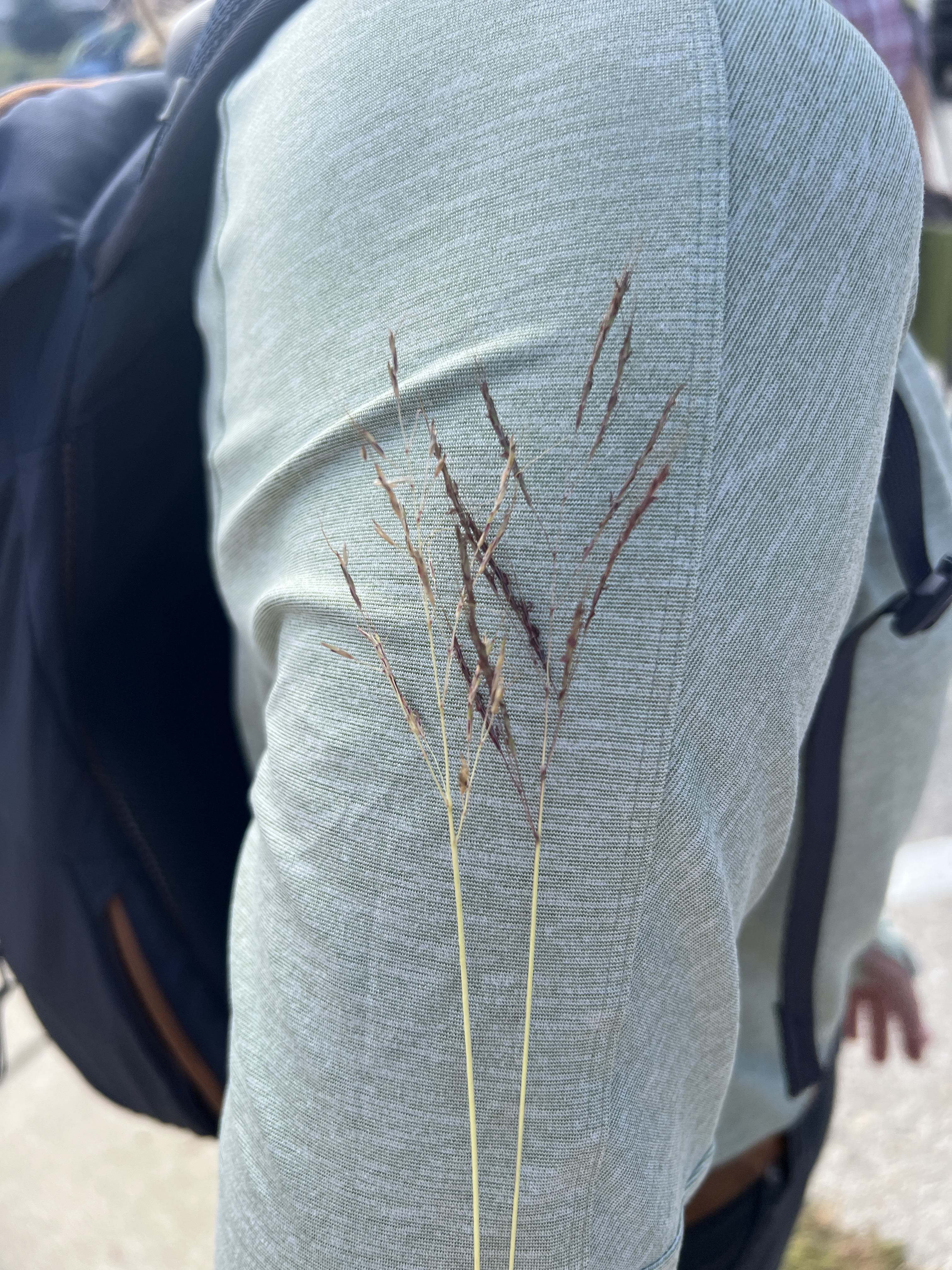
Invasive King Ranch Bluestem. A wispy delicate Andropogon.

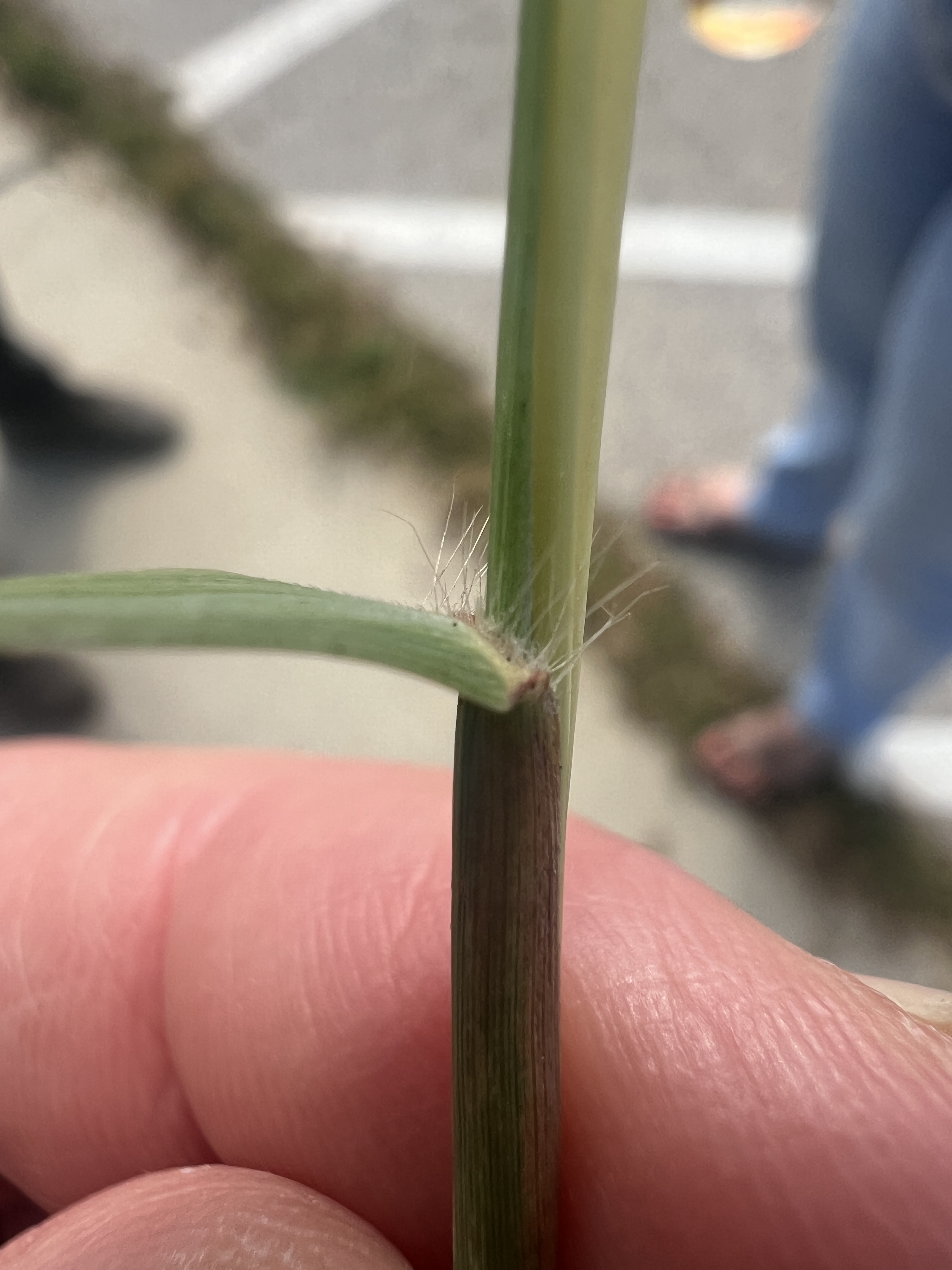
King Ranch Bluestem has these hairs at the leaf nodes.

On day two we were with Johnson County Parks and Recreation District. We broke into three groups and travelled by van and toured several restorations and two remnants.

And we enjoyed native plants and pondered how to help them prosper.

Eryngium leavenworthii, the same genus as rattlesnake master but very short and purple.
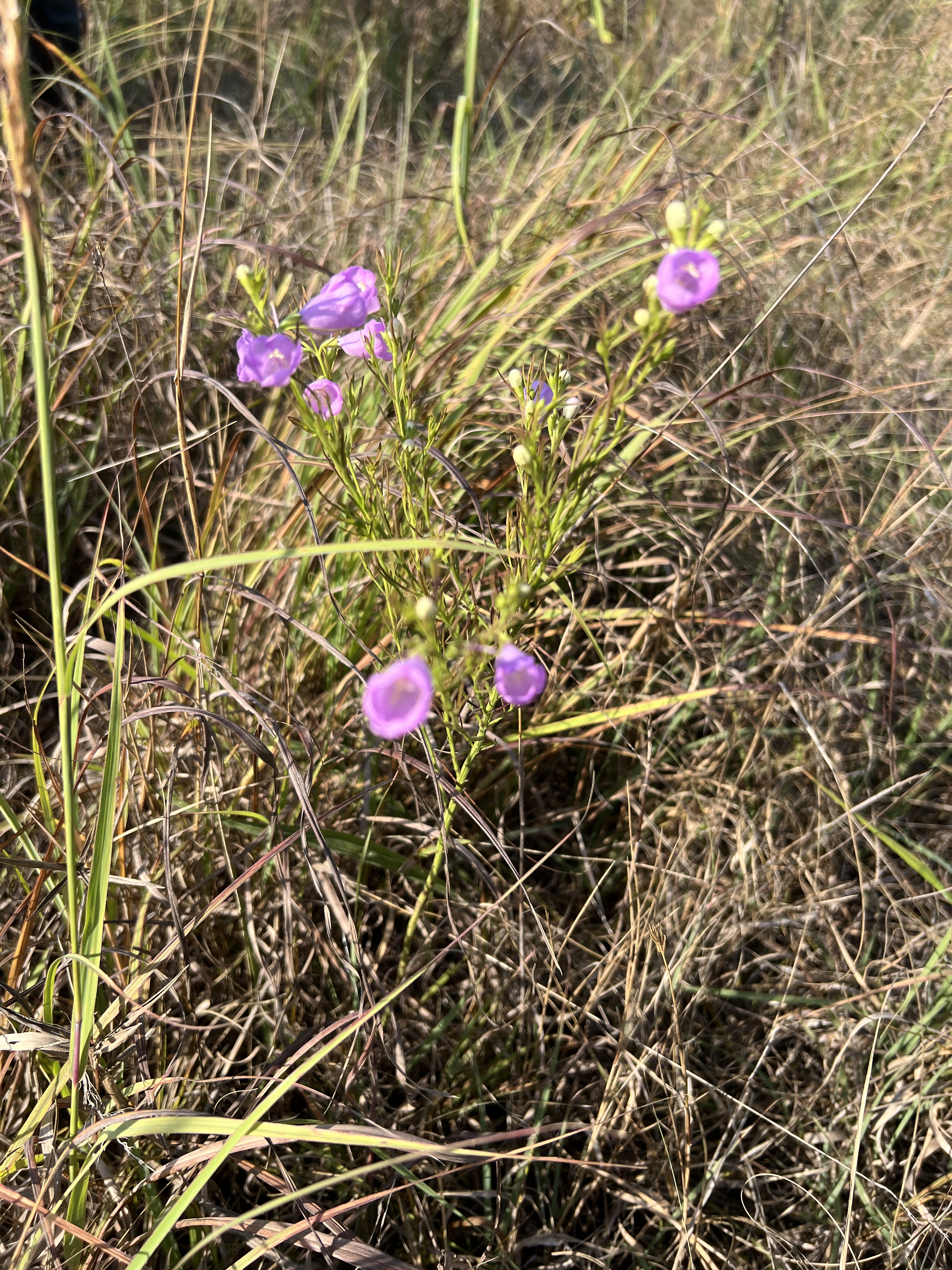
We think this is Agalinus aspera. When we are at the back of the tour line we decide for ourselves what we are seeing.
Agalinus auriculata

Invasive Lespedeza, L cuneata, was there to darken our doorway. We saw singles, small thickets and fields of Sericea, but we also saw examples of high diversity prairie plantings in which Sericea was being excluded with some careful foot and UTV patrols.

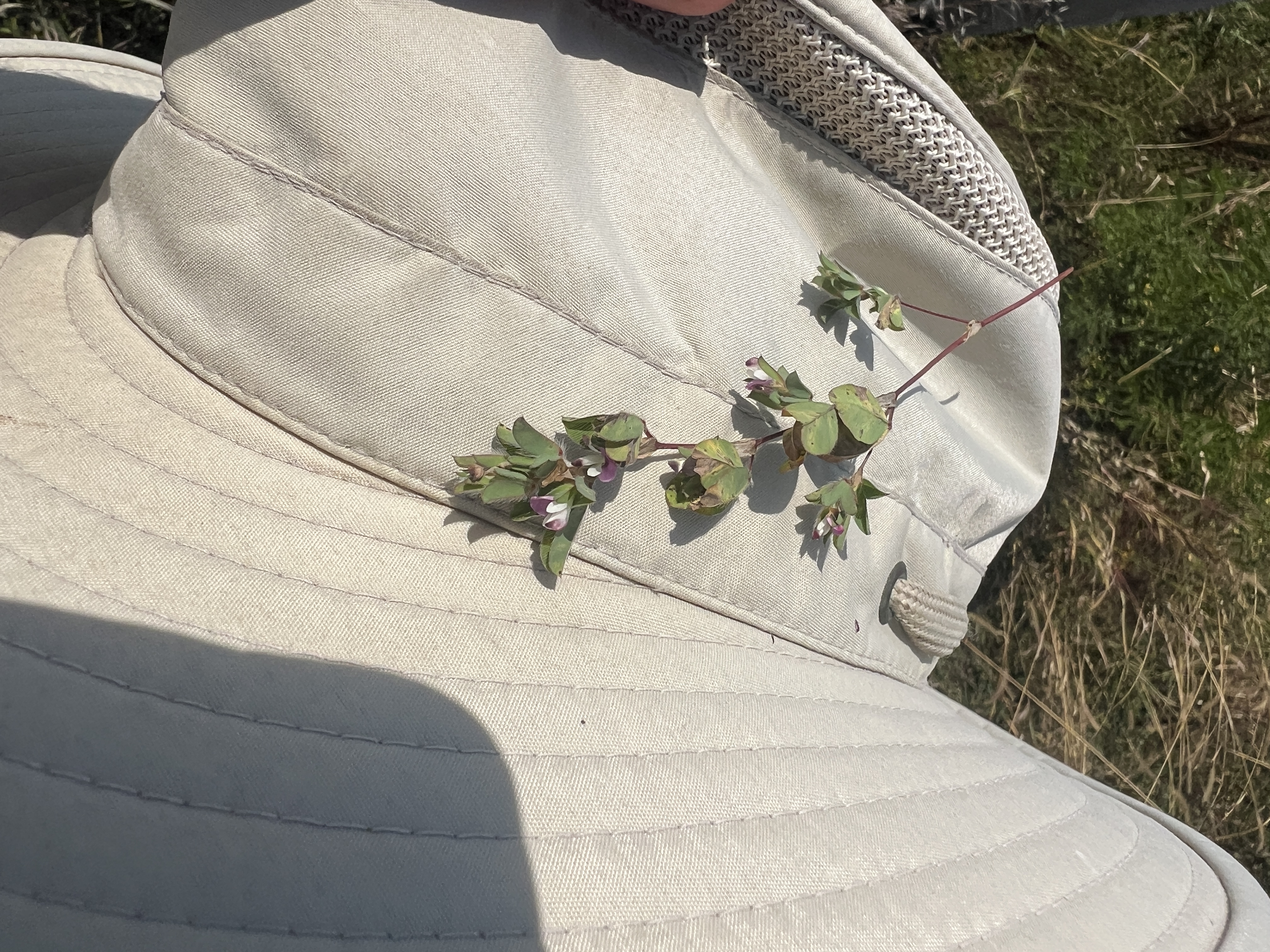
Below is Korean Lespedeza.

Invasive Korean Lespedeza, Kummerowia stipulacea. This short sprawling weed had formed a thicket.

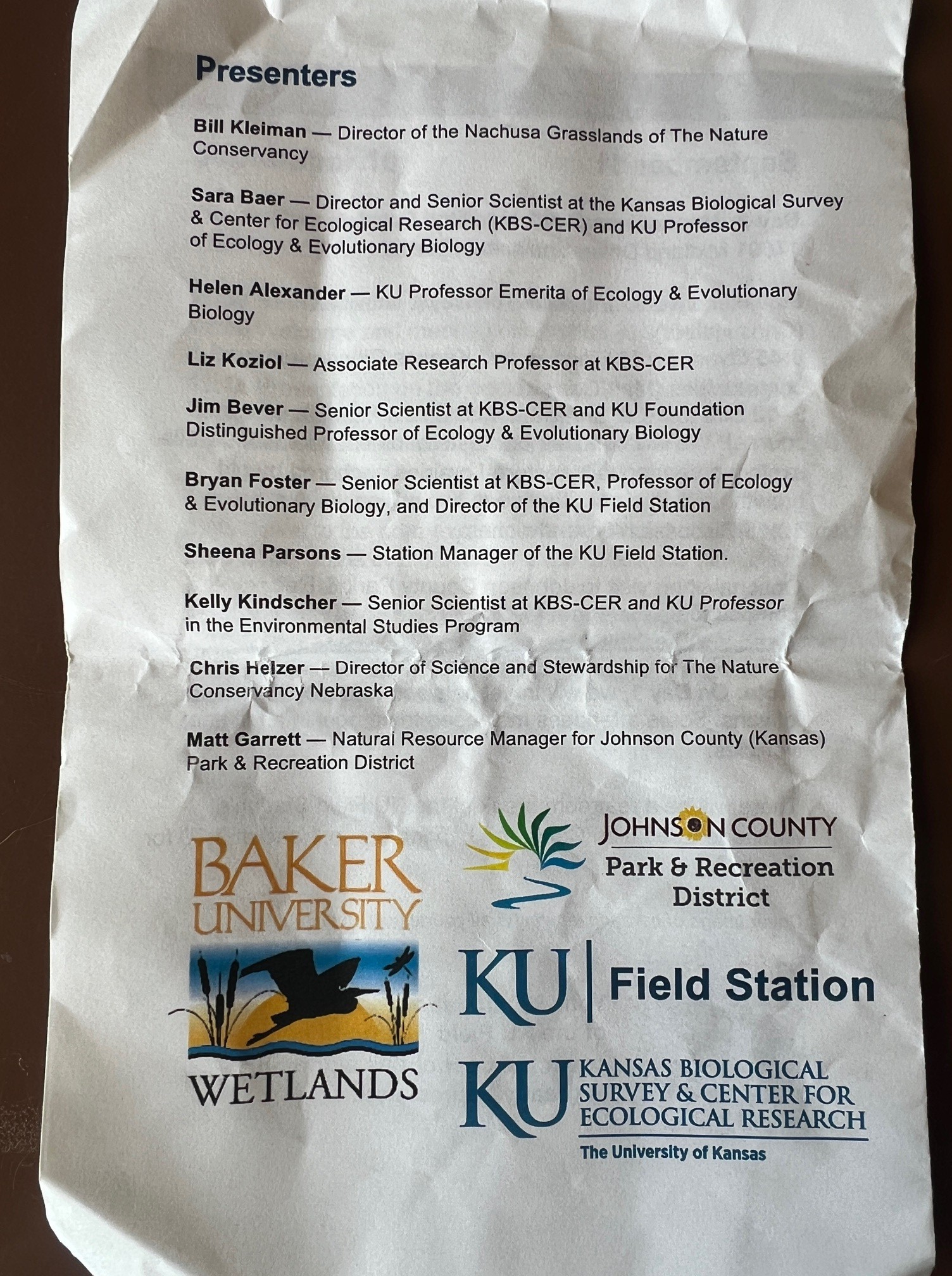
My crumpled agenda has the presenters and agencies to thank. Sara Baer offered to host this GRN and she, above all, made this happen.

Elizabeth Bach, Sara Baer and Mike Saxton

Posted in Uncategorized | Tagged , , , | 1 Comment

How much abundance of seed should we plant to establish a good prairie in a corn field?

By Bill Kleiman

A basic question in prairie plantings is what is the weight of seed to plant per acre?  You would think that the community of prairie restoration ecologists would have answered this question in a controlled study a few times.  But back in 2006 I did not know of any published studies, so I started a study and then partnered with ecologist, David Goldblum, to gather the data and publish a nice summary.

The punch line is you should plant a lot of seed, but there is a point of diminishing returns. For us 50 pounds per acre of uncleaned seed (with plenty of chaff) produced as good a result as did 70 pounds.

50 pounds per acre of uncleaned seed is a lot! When I first started planting prairies at Nachusa we were at perhaps 12 to 15 pounds per acre. We got mixed results, with some areas not establishing well and exotic plants occupying a lot of space. Then we noticed that volunteer Jay Stacy got a fantastic establishment of prairie by dumping on an immense amount of seed, which he was not weighing. Jay eventually produced a series of home run prairies and mentored many others here. So we increased our seeding weights, eventually hitting in the 40 to 50 pounds per acre of uncleaned seed. Our mixes were very high in species too, with 50 to 150 species. We have planting reports for many of these on the Friends of Nachusa Grasslands website.

So the data supported our theory that we need a lot of seed. Do not expect the natives to be able to keep out the exotics unless you seed a lot. And of course you will have exotics anyway as lawn grasses seem to be everywhere.

Here is a short summary of the study design:

In the fall of 2006 we set up a “random block design” to test four seed weights per acre for planting prairie seed in a field that was had been in a decades long corn/soy rotation.  This random block was a row of five cells, and there were three rows. This means there were three replicates. Each row is randomized. Hence the random block.

Here are the four treatments:

  1. 10 pounds bulk weight seed per acre.
  2. 30 pounds bulk weight seed per acre.
  3. 50 pounds bulk weight seed per acre.
  4. 70 pounds bulk weight seed per acre.
  5. Control: No seed will be added.

By bulk weight I mean the seed mix was not cleaned and contained chaff and stems. From previous comparisons to cleaned seed the bulk mix is about 40% seed by weight.

On the second growing season of the planting Northern Illinois University grad student Brian Glaves and his professor David Goldblum used quadrat to gather the data. The study was evaluated using Floristic Quality Indices recording all species and their cover

This is the random block prepped and seeded.
The seed was carefully planted by hand. The seed is hard to notice, and yet it is enough to establish a thick prairie. Seeds are little packets of hope.
Bernie and Bill. Bernie helped me plant the seed. 19 years ago Bernie!.
Paper bag B4 would contain the carefully weighed seed for that cell. Each bag had the same seed mix, but there were different weights of the mix in each bag.

David Goldblum wrote the paper we published in 2013. Here he is in 2017 setting up a different experiment at Nachusa Grasslands

Here is the link to the paper in Ecological Restoration:

The Impact of Seed Mix Weight on Diversity and Species Composition in a Tallgrass Prairie Restoration Planting, Nachusa Grasslands, Illinois, USA

David Goldblum, Brian P. Glaves, Lesley S. Rigg and Bill Kleiman

Ecological Restoration, June 2013, 31 (2) 154-167; DOI: https://doi.org/10.3368/er.31.2.154

https://er.uwpress.org/content/31/2/154

From the paper: “Low seed density plots had low species evenness, while densities of 56.0 and 78.5 kg/ha [these were the high seed rates 50 pounds and 70 pounds] showed significantly greater evenness. Based on germination and growth, the floristic quality index (FQI) was significantly lower in the control and lighter seed weight treatments. …Considering all ecological metrics analyzed, there were few differences between the 56.0 and 78.5 kg/ha treatments.

Posted in Uncategorized | Tagged , , , , | 4 Comments

Collecting 1.4 tons of seed

by Leah Kleiman, Land Restoration Specialist, Dane County Parks, Wisconsin

Dane County Parks Natural Areas Team – Dane County Parks is responsible for managing 15,000 acres of land. The role of the Natural Areas team is to restore most of these acres to oak-hickory woodland, oak savanna, and prairie. We are currently able to actively manage 5,000 of these acres. Every year we convert several hundred acres from agricultural fields to native habitat, usually prairie, which requires a lot of seed. The slower process of restoring degraded woodland also requires the addition of seed, and we often add to previous plantings when we can. This means we require several thousand pounds of seed per year. 

One of my favorite County Parks, Silverwood. This is an excellent example of volunteer effort creating a beautiful restoration.

Seed Collecting – In 2024 we collected over 3,100 lbs. of seed from 169 species. This was almost entirely collected by hand, with a handful of species being collected with a seed stripper. Our staff would never be able to collect this seed on our own, but we are lucky enough to have dedicated partners and a community of volunteers who love to give back to the land. Our volunteers assist us in every step of the process. Our staff hosted 52 volunteer seed collection workdays from the end of August through mid-October. This meant we often had multiple workdays happening simultaneously, each run by 1-3 staff members throughout the fall. Not to mention volunteer groups that lead their own!

Women and Gender Minorities Seed Collection Workday

We also had three contracted Operation Fresh Start crews who spent many weeks collecting hundreds of pounds of seeds. A few species of seeded were traded with local USFWS and DNR colleagues as well. Dane County Parks is very thankful for these excellent partnerships throughout the year, no matter what the seasonal tasks are! 

OFS crew collecting Lupine
Exact Sciences corporate group seed collection workday
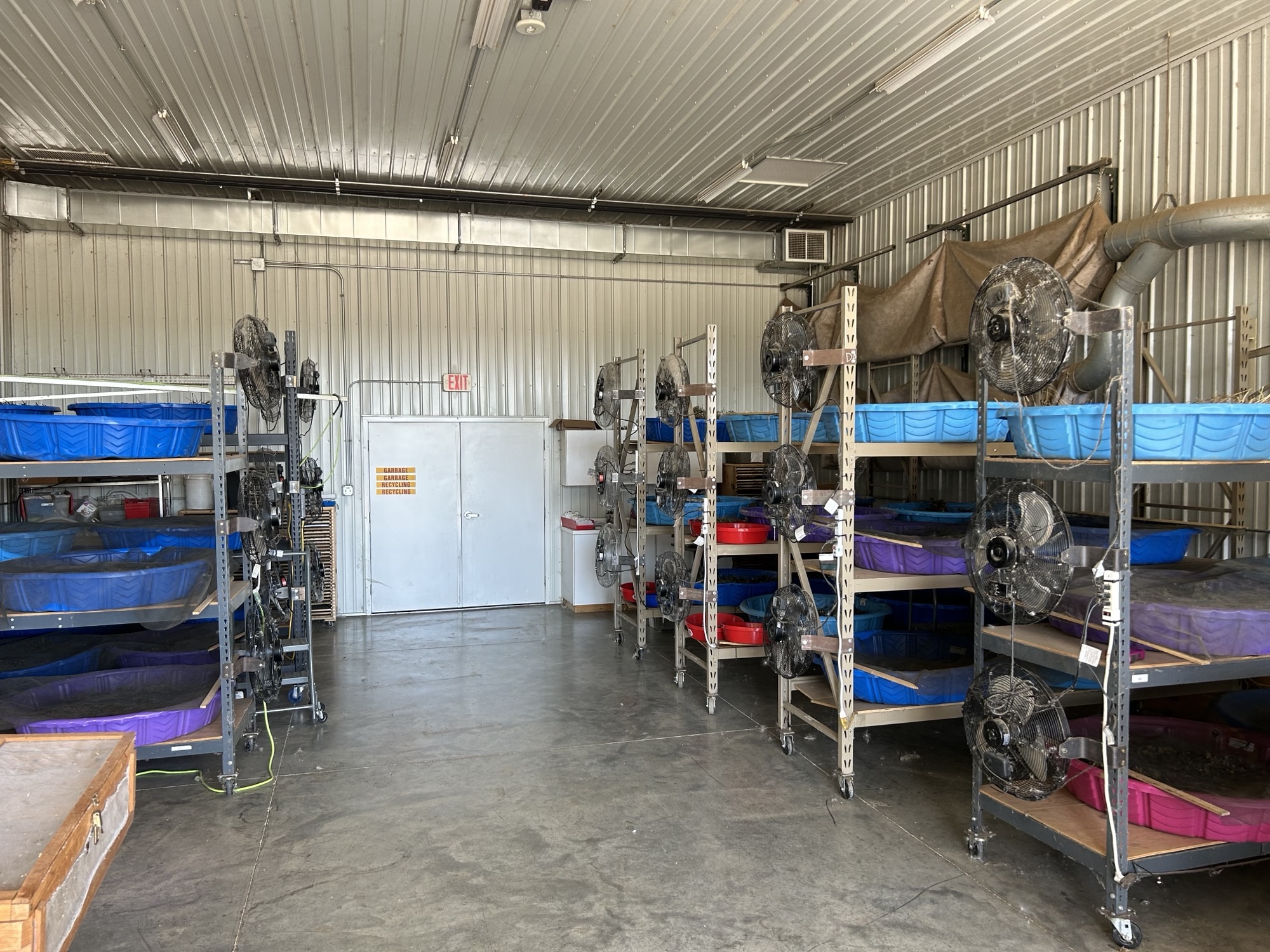
One of three bays where we dry our seed in kiddy pools
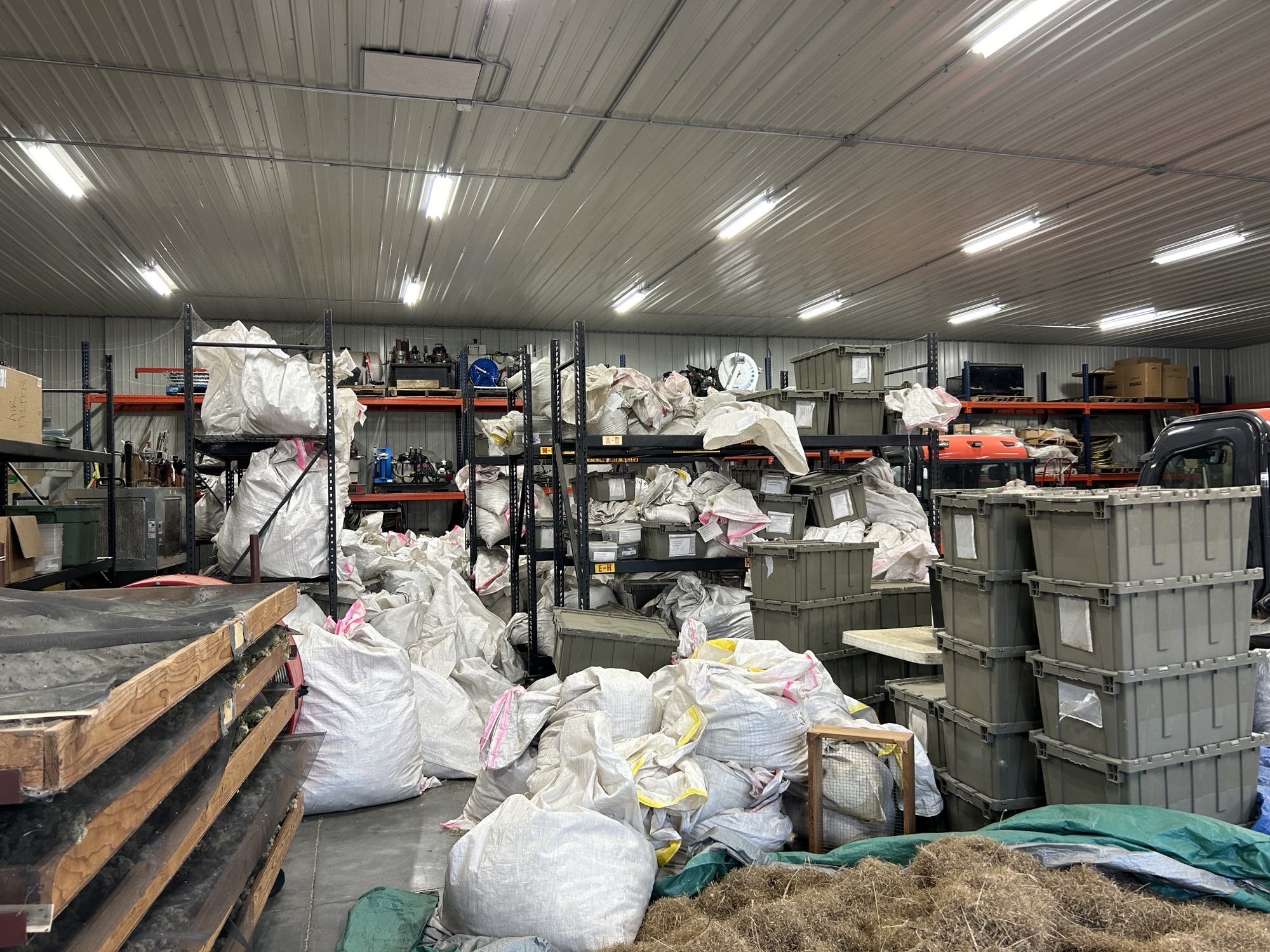
Dried seed waiting to be processed

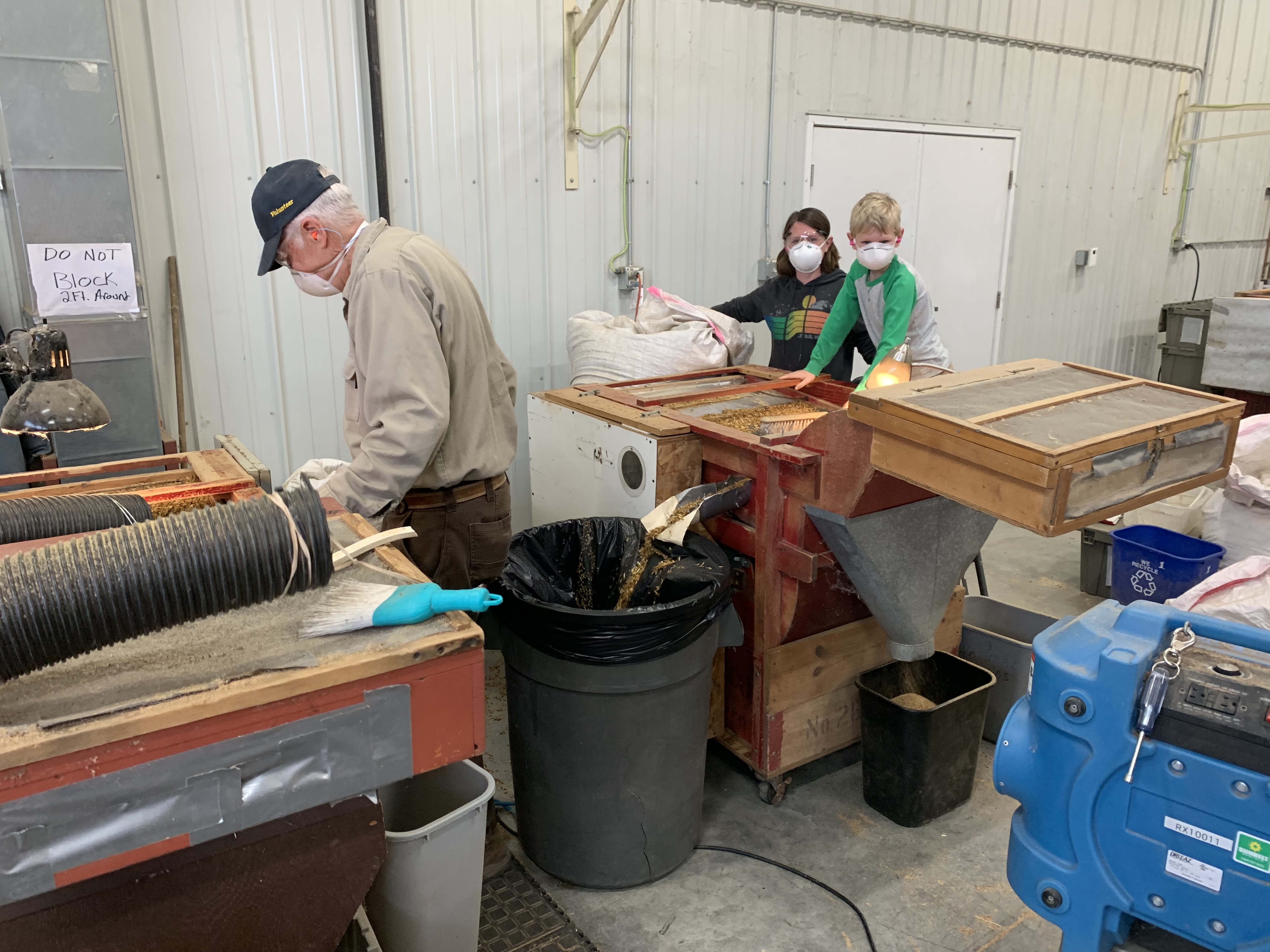
Seed processing (cleaning) – Each day, after the seed has been collected, it is laid out in kiddy pools on racks to dry under fans. Once the seed is dry, we process (or clean) it. This is all done in our seed shed where we run the seed through hammer mills to break up the stems and release the seed from the vegetative plant parts. We then run the seed through fanning mills which act as a sort of sieve with a fan to separate “the wheat from the chaff” leaving us with (nearly) pure seed. Often these processes are each repeated multiple times before moving on. In this, too, our volunteers work right alongside our staff. From the end of October through mid-November we had seed cleaning workdays every day of the week. We typically run two a day, one in the morning and one in the afternoon. In total, we had 36 seed cleaning workdays last fall. Our seed shed (two bays of a pole barn) can have two hammer mills and 6 fanning mills going at once.

Volunteers using fanning mills to clean seed
Natural Areas staff, Steven Bachleda, explaining the equipment to volunteers

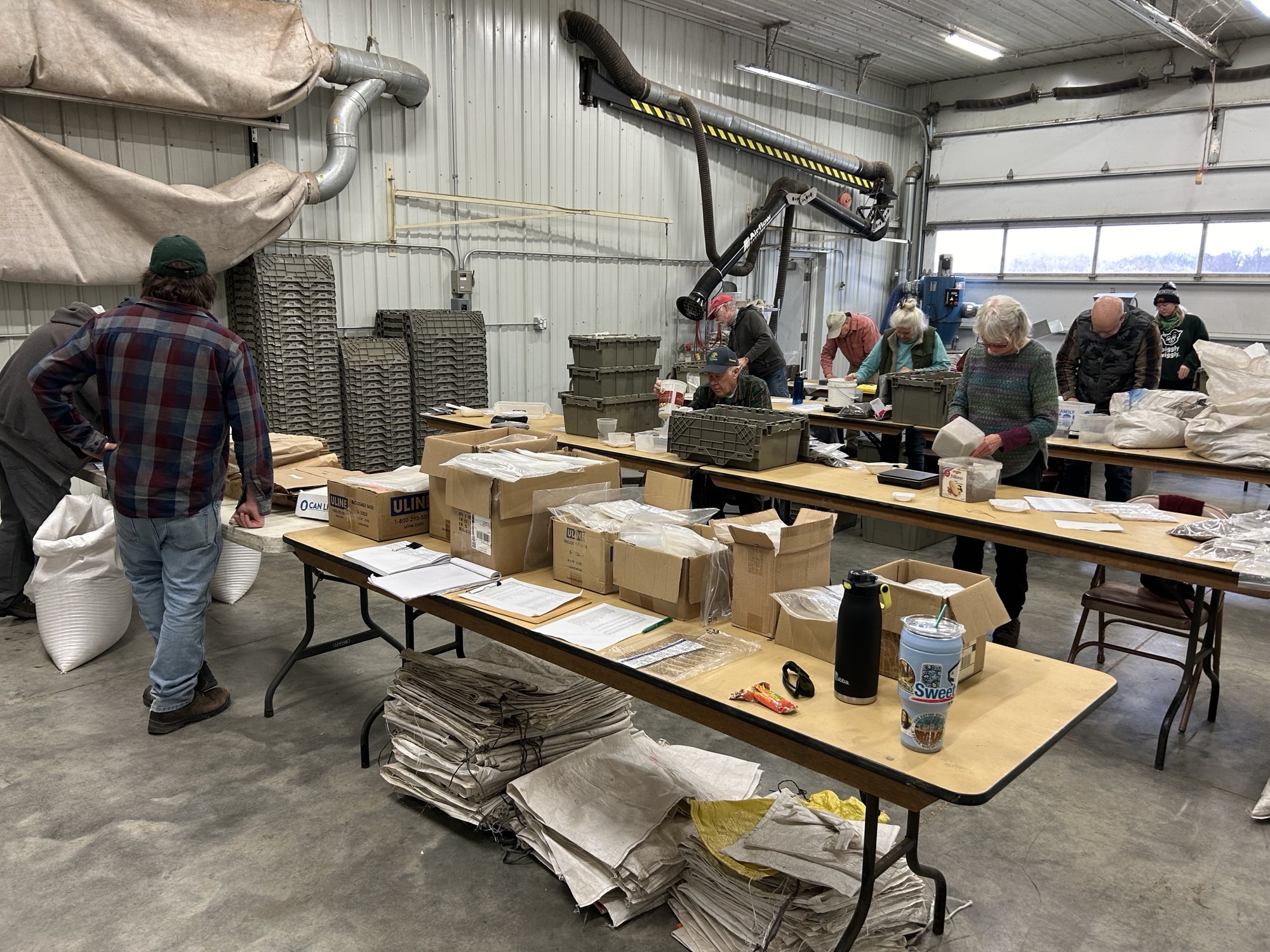
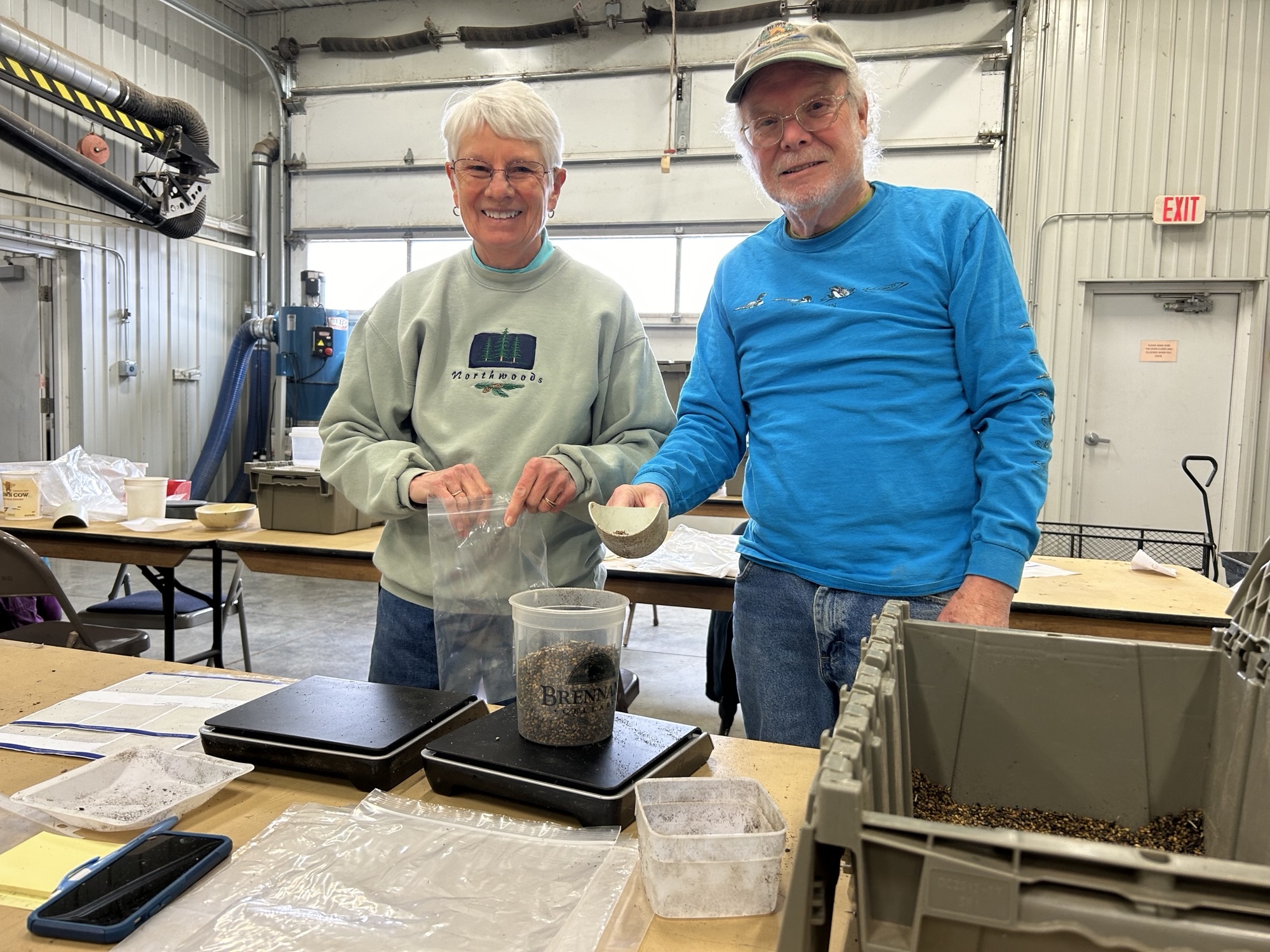
Weighing and bagging -Once all the seed has been cleaned, our staff weighs the totals of each species so we know what we have to work with for our seed mixes. This year we had 78 mixes, each for a different site to plant or over-seed. Dane County Parks volunteers, partner organizations, and local community groups (such as libraries and schools) request seed mixes from staff throughout the year that get on this list. Our seed is spread across the community, not just on Dane County land. The seed mixes are built in a spread sheet, and then it’s time to make them a reality by weighing out the correct amount of each species for each mix. Once again, our volunteers step up. This past year we had several seed weighing and bagging workdays in the first two weeks of the new year. Each volunteer works on one species at a time weighing out pre-determined amounts of seed, bagging them, and adding printed sticker labels with the correct mix. Staff then transport these bags into the next room and place them each in a designated mix area. 

Volunteers weighing and bagging seeds at a workday
Long-time volunteers Bonnie and Jack weighing out seed. Jack helps to build our complex spreadsheet for creating seed mixes

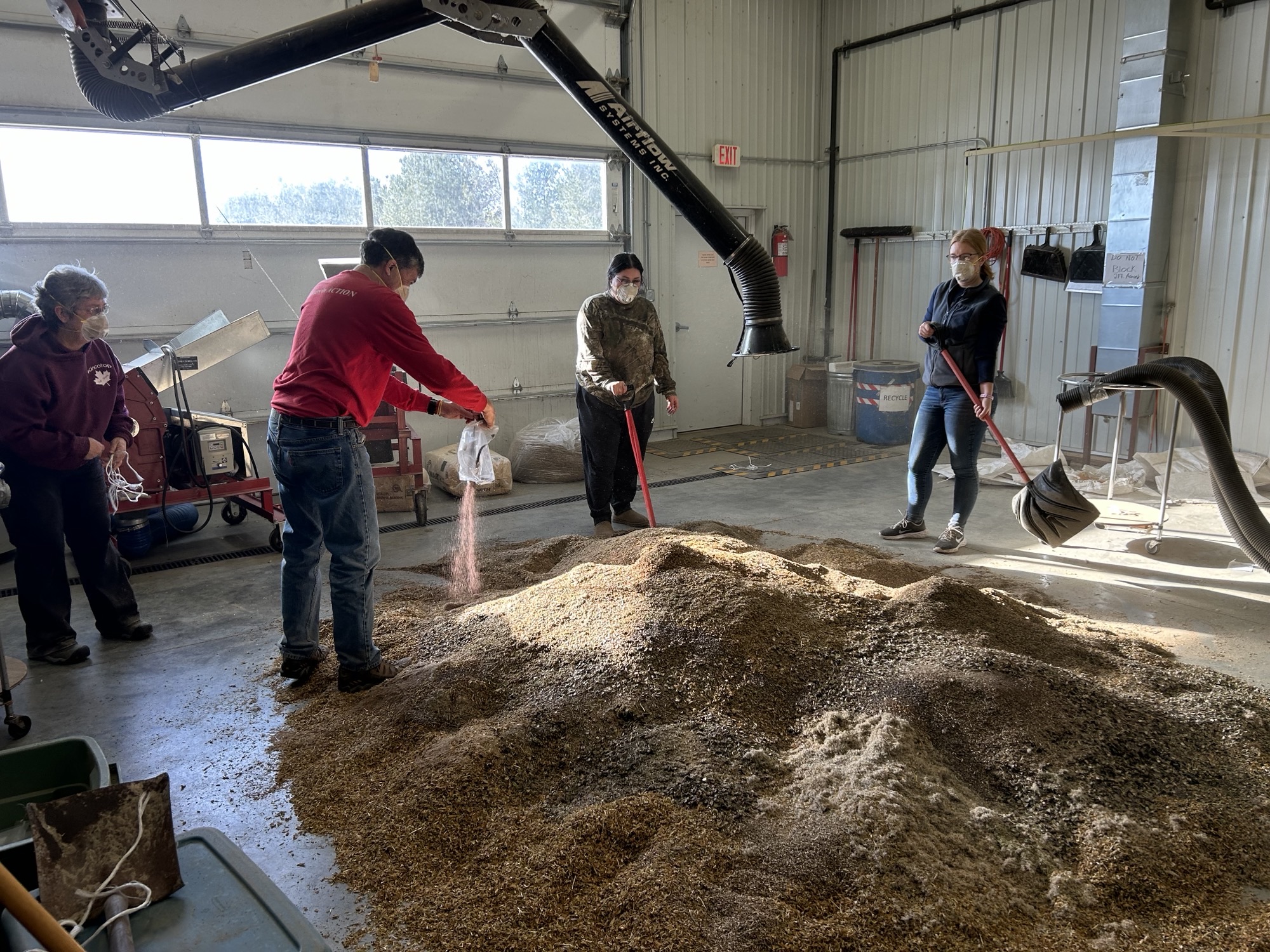
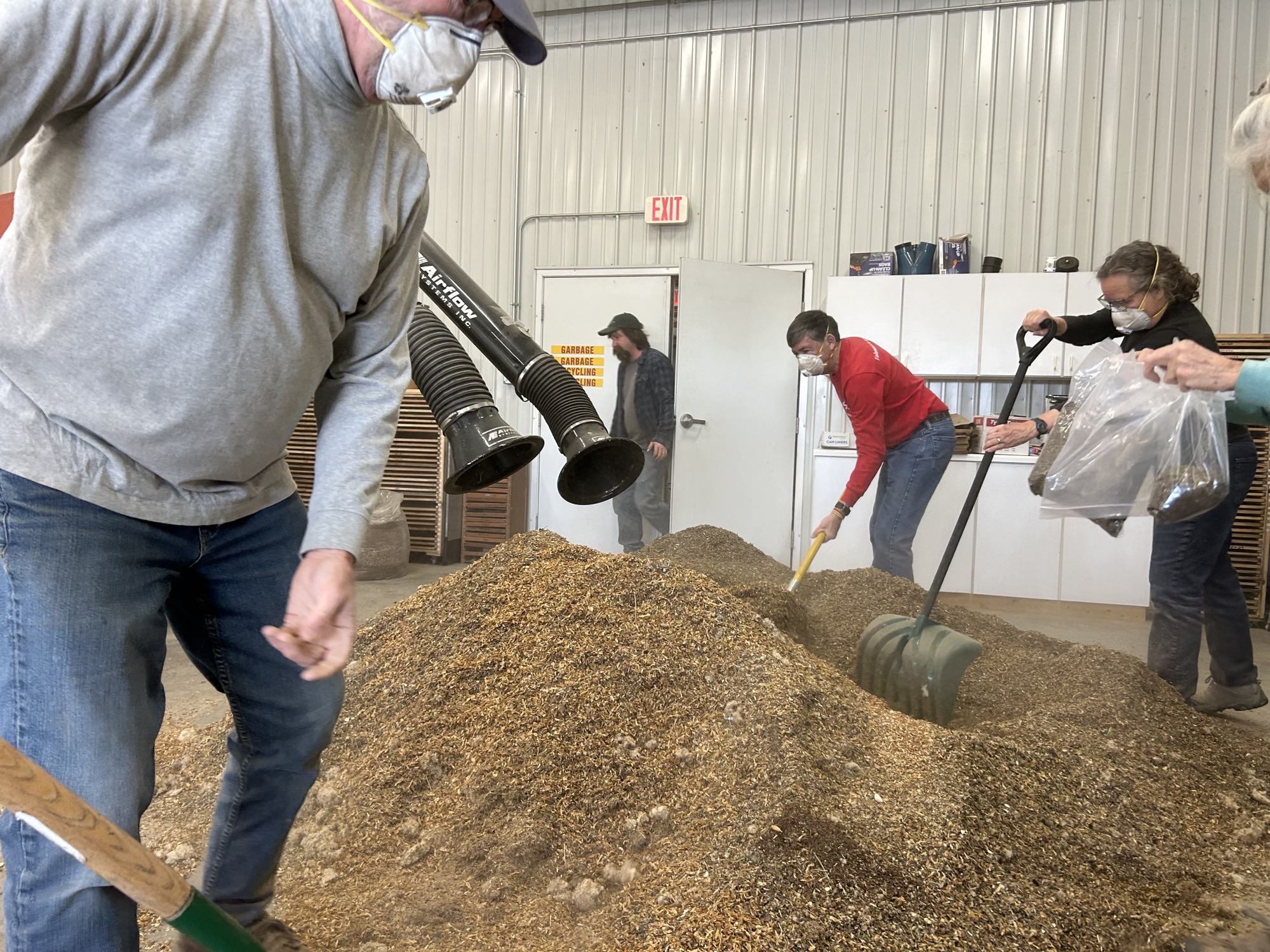
Seed mixing workdays – As soon we finish weighing and bagging, it’s time to dump all those bags back out again and create the individualized mixes for each site. It took just a handful of workdays to mix all 78. Volunteers come in and are supplied with shovels and brooms to mix the seed. Staff keep track of the different mixes, making sure they are bagged back up once mixed and labeled again for their designated site. This all requires a lot of coordination and triple-checking hundreds of labels. When we mix the different species of seed together, we add back in some of the chaff we previously removed. This is the “good chaff” that is not too dusty or full of twigs. It may sound counterintuitive to add back in what we worked so hard to remove, but having clean seed allows us to know exactly how much we have and carefully proportion it, while adding good chaff back in bulks up the mix so it can be spread more evenly and not have certain sizes of seed clumping up. 

Volunteers mixing seed on a workday this January
Volunteers mixing seed. It gets pretty dusty! The black tubes are connected to an air filtration device

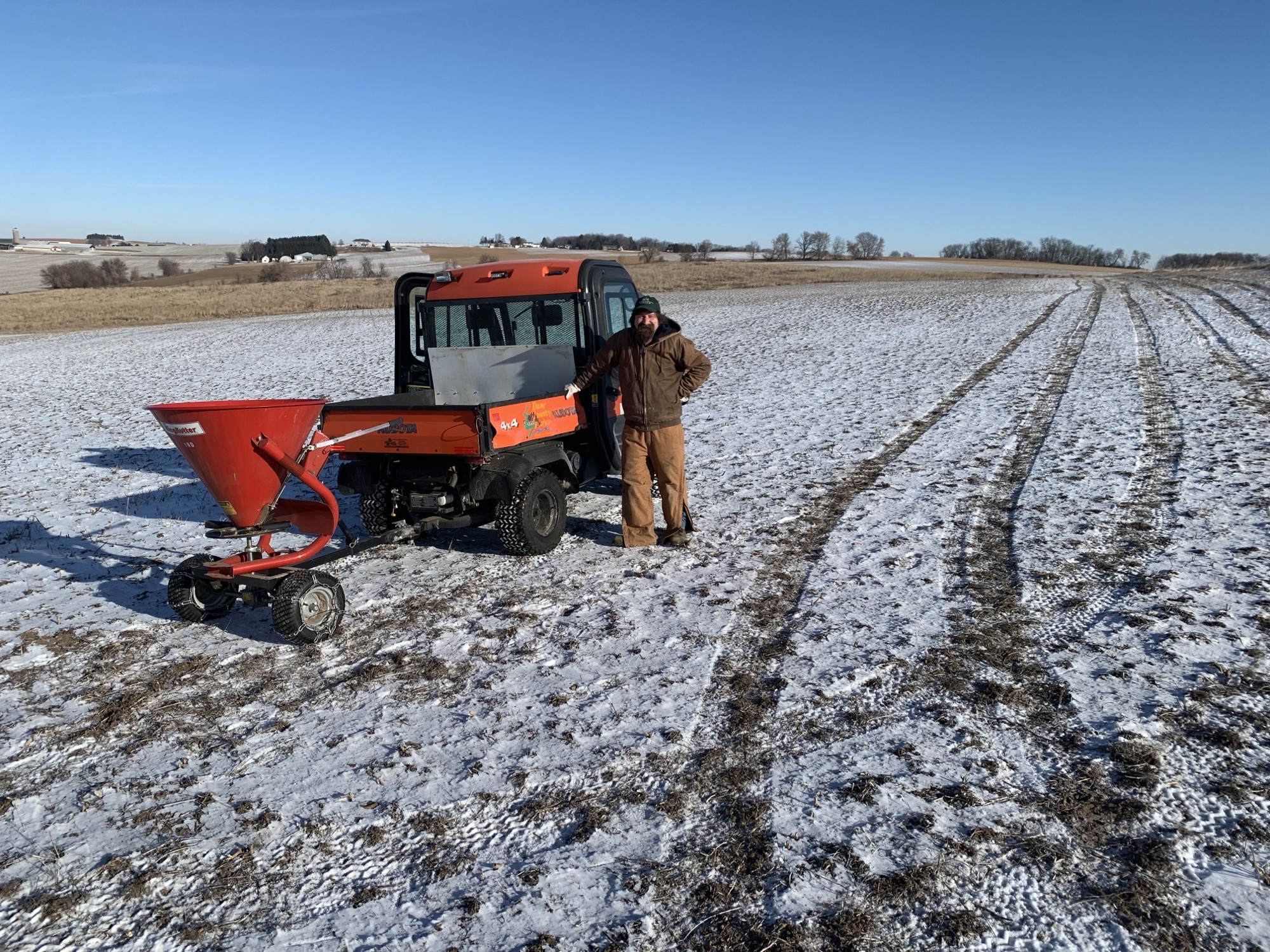
Seed spreading in winter – Our staff spreads the largest mixes, typically the new prairie plantings, with pendulum seeders pulled behind UTVs or tractors. We prefer to do this on top of snow, so that our tracks and seed can easily be seen, allowing for an even coat. Small plantings or over-seeding areas are often planted by hand. This can also be done with rare species that need to be planted in highly specific areas. How do we hand-plant dozens of seed mixes? You guessed it, volunteers! Many parks have volunteer Friends groups or Certified Land Stewards (volunteers with training to work independently) who may be responsible for spreading their own seed mixes once they pick them up from staff. We also have several volunteer workdays where staff lead volunteers in hand planting. All of this gets completed in time for burn season! Before we know it, we will be starting to collect next year’s seed.

Steven Bachleda spreading seed with a pendulum seeder this winter. Notice the clear tracks in the snow, he can see where he has been.
School group spreads seeds through a savanna
Lars Higdon, Botanist/Naturalist, basks in our incredible Cream Gentian haul. This wasn’t even half of it.

Posted in Uncategorized | Tagged , , , | 3 Comments

Using Grazing to Combat Invasive Species

By David Crites, Niobrara Valley Preserve Program Manager, The Nature Conservancy

Grazing is an important tool in managing grasslands and can be used to effectively limit dominant grasses from eliminating many forbs from a healthy prairie. While managing grazing on a Turner bison ranch I wondered if we could somehow use these same grazers to negatively impact invasive species.

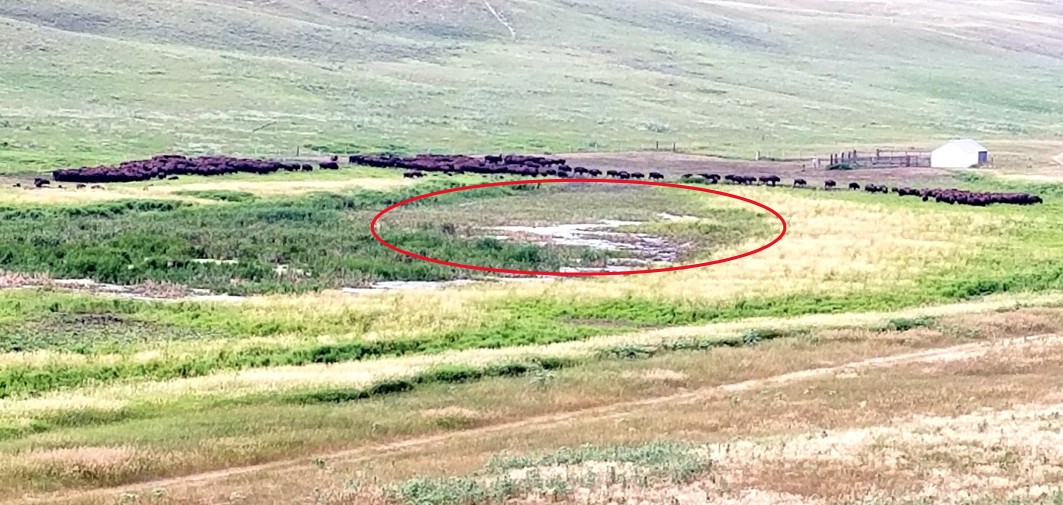
That summer I was responsible for managing a herd of around 1,000 yearling bison. We utilized high intensity short duration grazing to manage a complex system of wet meadows on the ranch. One of these meadows had a fairly large stand of narrow leaf cattail growing around an artesian well site. You can see the dense cattail outlined in red in photo 1 below.

In this next photo the yearling bison are just moving into the pasture. The area circled in red is approximately 5 acres in size with the total paddock being 10 acres in size. The bison were held in the area by 3 strand high tensile electric fence 42 inches high on three sides. The fourth side was a single electric poly wire.

Narrow leaf cattail is actually very nutritious grazing forage. The question was how can I encourage the bison to eat that nutritious forage. To accomplish this, I lightly spread loose bison mineral in several spots among the cattails. The bison moved into the dense cattail to retrieve the mineral and while doing so grazed on the cattail. Once they tasted it, they readily ate large amounts.

In photo 2 above you can see that the bison heavily grazed a large portion of the cattail down to the ground/water level.  The mineral enticed them into the cattail patch, and once they tasted the forage, they continued to consume large quantities of the cattail.

In photo three above you can see the herd of yearlings leaving the pasture having consumed the vast majority of the cattails.  The total elapsed time for this grazing was around 28 hours.

As I continued to manage this herd of bison, they targeted cattail anytime it was available for the rest of the year. The really amazing part of this experiment came when we introduced several of these yearlings into the main herd on the ranch.  For lack of a better term, the yearlings taught the main herd animals to target cattail whenever available. Four years later, that learned behavior still exists in the herd and they continue to eat cattail.

In addition to cattail I was successful in getting the bison to target Canada thistle. I used the same process as with the cattail and although the thistle is not as palatable, the bison ate it as well. The more important result with the thistle was that they trampled the entire patch into the ground. As long as you can get the animals on the thistle prior to flowering/seed production, the trampling is equal to or better than mowing and a lot less work for the land steward.

This isn’t a solution for everyone, but if you have grazers, put them to work for you!

Posted in Uncategorized | Tagged , , , | 5 Comments